Word Explanation
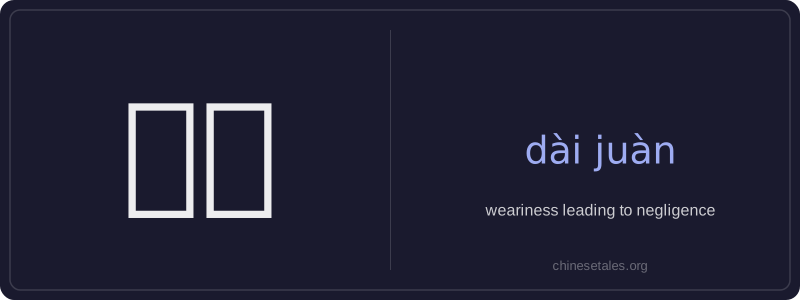
怠倦 (dài juàn) is a classical and literary noun meaning 'weariness that leads to negligence or slackness.' The character 怠 means 'negligent,' 'slack,' or 'lax,' often implying a moral or duty-related failure due to fatigue; 倦 means 'weary,' 'tired,' or 'jaded,' conveying physical or mental exhaustion. Together, they form a compound emphasizing not just tiredness, but the resulting decline in diligence, vigilance, or responsibility — a state where fatigue erodes conscientiousness.
This term appears most frequently in formal writing, historical texts, philosophical discourse, or critiques of behavior (e.g., official dereliction, spiritual complacency). It carries a subtle moral weight: it’s not neutral fatigue, but fatigue that compromises integrity or duty. While rarely used in casual speech, it remains recognizable to educated native speakers and appears in idioms like 怠倦成疾 ('negligence and weariness lead to illness') or in admonitions about self-discipline.
Example Sentences
Related Words
国语
‘Guó yǔ’ literally means 'national language'—
无论谁
‘无论谁’ (wú lùn shéi) is a pronoun meaning
不对
不对 (bù duì) literally combines 不 (bù), meani
外语
‘外语’ literally means ‘outside language’ —
我的
我的 (wǒ de) is a possessive pronoun meaning 'my'
亲笔
‘亲笔’ literally means ‘one’s own hand’—comb
违规
违规 (wéi guī) literally means 'to violate rules
面条
‘面条’ (miàn tiáo) literally means ‘flour str