Word Explanation
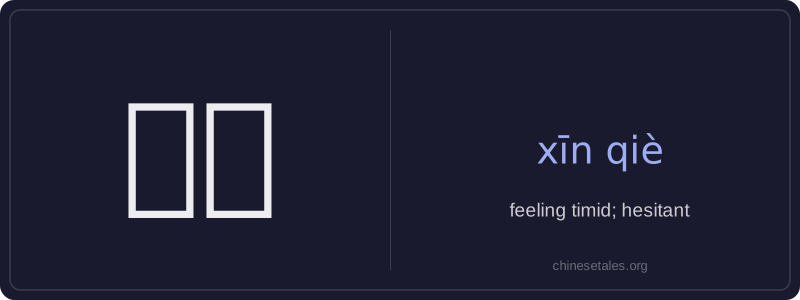
心怯 literally combines 心 (xīn, 'heart' or 'mind') and 怯 (qiè, 'timid' or 'fearful'), conveying an internal, emotional state of hesitation or nervousness—often before a challenge or unfamiliar situation. Unlike stronger terms like 害怕 (hàipà, 'to be afraid'), 心怯 describes a quieter, more subtle unease: a mental flutter rather than overt fear. It reflects self-doubt or lack of confidence rooted in one’s inner feelings, not external danger.
This word is commonly used in spoken and written Chinese to describe psychological hesitation—before speaking up, performing, meeting someone new, or making a decision. It often appears after verbs like 感到 (gǎndào, 'to feel'), 显得 (xiǎnde, 'to appear'), or as a predicate adjective. While it can describe momentary shyness, it may also hint at deeper insecurity. It’s neutral in register—not overly formal nor slangy—and frequently occurs in narratives, self-reflection, and interpersonal descriptions.
Example Sentences
Related Words
国语
‘Guó yǔ’ literally means 'national language'—
无论谁
‘无论谁’ (wú lùn shéi) is a pronoun meaning
不对
不对 (bù duì) literally combines 不 (bù), meani
外语
‘外语’ literally means ‘outside language’ —
我的
我的 (wǒ de) is a possessive pronoun meaning 'my'
亲笔
‘亲笔’ literally means ‘one’s own hand’—comb
违规
违规 (wéi guī) literally means 'to violate rules
面条
‘面条’ (miàn tiáo) literally means ‘flour str