Word Explanation
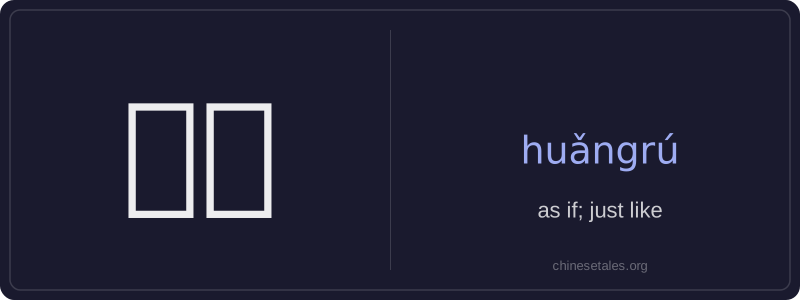
‘恍如’ is an adverbial phrase meaning 'as if' or 'just like,' used to introduce a vivid, often emotionally resonant comparison—especially one that evokes surprise, nostalgia, or unreality. The first character 恍 (huǎng) conveys a sense of sudden mental clarity or dazed realization, while 如 (rú) means 'like' or 'as.' Together, they express the feeling of something seeming so real or familiar that it momentarily blurs the line between memory and present experience.
This phrase is literary and moderately formal, commonly found in descriptive writing, poetry, and reflective speech. It typically precedes a noun phrase or clause introduced by a comma or followed by 是 (shì), e.g., ‘恍如昨日’ (as if it were yesterday). Unlike colloquial alternatives like 好像, 恍如 carries emotional weight and poetic nuance—often suggesting wonder, melancholy, or time distortion. It’s rarely used in casual conversation but appears frequently in essays, novels, and speeches about memory, dreams, or profound change.
Example Sentences
Related Words
国语
‘Guó yǔ’ literally means 'national language'—
无论谁
‘无论谁’ (wú lùn shéi) is a pronoun meaning
不对
不对 (bù duì) literally combines 不 (bù), meani
外语
‘外语’ literally means ‘outside language’ —
我的
我的 (wǒ de) is a possessive pronoun meaning 'my'
亲笔
‘亲笔’ literally means ‘one’s own hand’—comb
违规
违规 (wéi guī) literally means 'to violate rules
面条
‘面条’ (miàn tiáo) literally means ‘flour str