Word Explanation
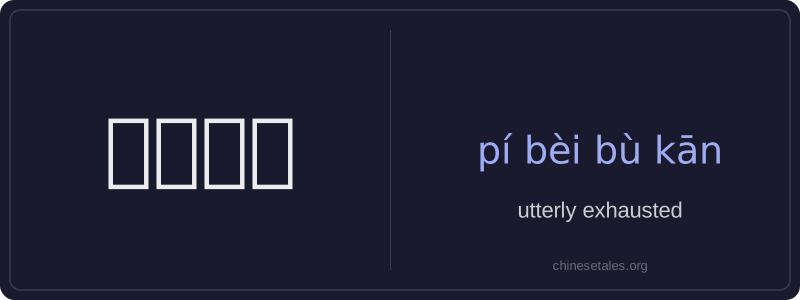
‘疲惫不堪’ is a four-character idiom meaning 'utterly exhausted'—so worn out that one can barely function. The first two characters, 疲 and 惫, both mean 'tired' or 'weary', creating strong emphasis through repetition. The latter two, 不堪, literally mean 'unable to bear' or 'incapable of enduring', reinforcing the idea of reaching one’s physical or mental limit. Together, the phrase conveys extreme fatigue beyond ordinary tiredness.
This expression is commonly used in formal writing, news reports, literature, and serious spoken contexts—such as describing overworked professionals, athletes after intense competition, or caregivers under prolonged stress. It carries a tone of gravity and empathy, often implying concern for someone’s well-being. Unlike casual terms like 累了 (lèi le), 疲惫不堪 suggests a severe, almost debilitating state requiring rest or intervention.
Example Sentences
Related Words
国语
‘Guó yǔ’ literally means 'national language'—
无论谁
‘无论谁’ (wú lùn shéi) is a pronoun meaning
不对
不对 (bù duì) literally combines 不 (bù), meani
外语
‘外语’ literally means ‘outside language’ —
违规
违规 (wéi guī) literally means 'to violate rules
我的
我的 (wǒ de) is a possessive pronoun meaning 'my'
亲笔
‘亲笔’ literally means ‘one’s own hand’—comb
面条
‘面条’ (miàn tiáo) literally means ‘flour str