Word Explanation
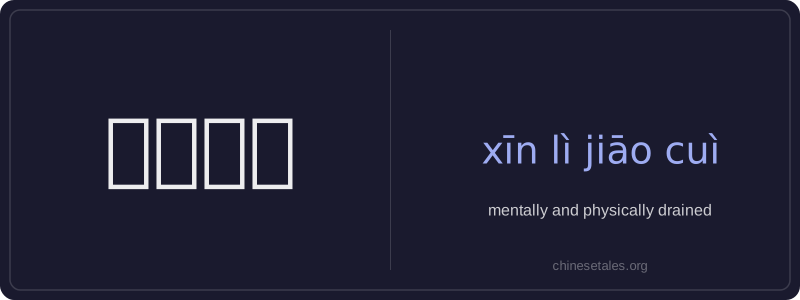
心力交瘁 literally means 'heart and strength mutually exhausted' — '心' (xīn) refers to the mind or spirit, '力' (lì) means physical strength or energy, '交' (jiāo) indicates mutual or simultaneous occurrence, and '瘁' (cuì) means exhaustion or debilitation. Together, the phrase vividly describes a state of total depletion — where both mental and physical resources are completely drained, often after prolonged stress, overwork, caregiving, or emotional hardship.
This is a formal, literary idiom commonly used in written Chinese and serious spoken contexts (e.g., news reports, medical discussions, or personal reflections). It carries strong connotations of burnout and profound weariness — stronger than everyday terms like 累 (lèi, 'tired') or 疲劳 (píláo, 'fatigue'). It’s rarely used lightly; saying someone is 心力交瘁 implies they’re at a breaking point, not just sleepy or busy.
Example Sentences
Related Words
国语
‘Guó yǔ’ literally means 'national language'—
无论谁
‘无论谁’ (wú lùn shéi) is a pronoun meaning
不对
不对 (bù duì) literally combines 不 (bù), meani
外语
‘外语’ literally means ‘outside language’ —
违规
违规 (wéi guī) literally means 'to violate rules
我的
我的 (wǒ de) is a possessive pronoun meaning 'my'
亲笔
‘亲笔’ literally means ‘one’s own hand’—comb
面条
‘面条’ (miàn tiáo) literally means ‘flour str