Word Explanation
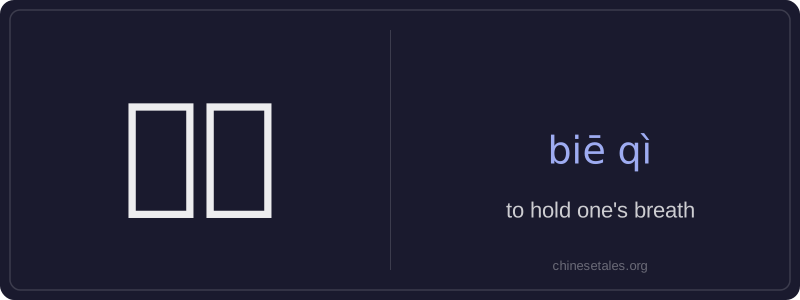
‘憋气’ literally combines ‘憋’ (to hold back, suppress) and ‘气’ (breath, air), meaning the conscious act of stopping or suppressing one’s breathing for a short period. It is not merely passive breath-holding but implies active restraint—often done intentionally during physical exertion, underwater activities, or emotional tension. The verb emphasizes effort and temporary control over natural respiration.
This term appears frequently in contexts involving sports (e.g., swimming, weightlifting), medical instructions (e.g., during imaging scans), and everyday expressions of frustration or nervousness (e.g., ‘我快憋气了!’ meaning ‘I can’t breathe!’). While it may sound dramatic in emotional speech, its core meaning remains physiological: voluntarily withholding exhalation and inhalation. It is rarely used as a noun and almost never refers to chronic breathing difficulty—unlike clinical terms like ‘呼吸困难’.
Example Sentences
Related Words
国语
‘Guó yǔ’ literally means 'national language'—
无论谁
‘无论谁’ (wú lùn shéi) is a pronoun meaning
不对
不对 (bù duì) literally combines 不 (bù), meani
外语
‘外语’ literally means ‘outside language’ —
违规
违规 (wéi guī) literally means 'to violate rules
我的
我的 (wǒ de) is a possessive pronoun meaning 'my'
亲笔
‘亲笔’ literally means ‘one’s own hand’—comb
面条
‘面条’ (miàn tiáo) literally means ‘flour str