Word Explanation
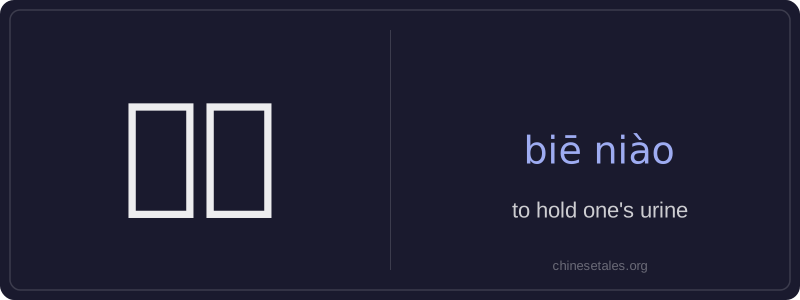
"Biē niào" literally combines 憋 (to hold back, suppress) and 尿 (urine), forming a verb meaning 'to hold one's urine'—that is, to consciously delay urination despite feeling the urge. It describes a physical act involving bladder control and often implies discomfort, urgency, or self-restraint.
This expression is commonly used in everyday spoken Chinese, especially when discussing bodily functions, health concerns, or humorous or relatable situations—like being stuck in traffic, waiting for a break at work, or traveling without restroom access. While not formal or clinical, it’s widely understood and neutral in register; however, it’s rarely used in written medical contexts, where terms like 'urinary retention' (尿潴留) would apply instead.
Example Sentences
Related Words
国语
‘Guó yǔ’ literally means 'national language'—
无论谁
‘无论谁’ (wú lùn shéi) is a pronoun meaning
不对
不对 (bù duì) literally combines 不 (bù), meani
外语
‘外语’ literally means ‘outside language’ —
违规
违规 (wéi guī) literally means 'to violate rules
我的
我的 (wǒ de) is a possessive pronoun meaning 'my'
亲笔
‘亲笔’ literally means ‘one’s own hand’—comb
面条
‘面条’ (miàn tiáo) literally means ‘flour str