Word Explanation
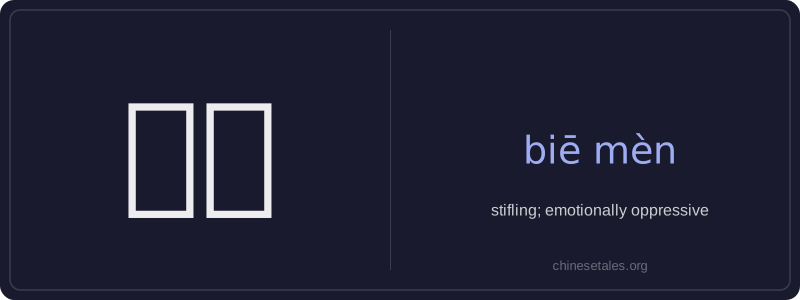
憋闷 (biē mèn) is an adjective describing a heavy, suffocating feeling — either physically (like hot, airless weather) or emotionally (such as anxiety, frustration, or sadness that feels trapped inside). The character 憋 means 'to hold back' or 'to suppress', often referring to breath, emotion, or energy; 闷 means 'stuffy', 'oppressive', or 'depressed'. Together, they evoke the sensation of being unable to release or escape internal pressure — like breath held too long or sorrow with no outlet.
This word is commonly used in everyday speech and writing to describe both environmental conditions (e.g., a sweltering room) and inner states (e.g., after bad news or prolonged stress). It carries a distinctly negative, somber tone and is rarely used in formal or technical contexts. Unlike neutral terms like 热 (hot), 憋闷 always implies discomfort and psychological weight — the physical and emotional sensations are deeply intertwined in its usage.
Example Sentences
Related Words
国语
‘Guó yǔ’ literally means 'national language'—
无论谁
‘无论谁’ (wú lùn shéi) is a pronoun meaning
不对
不对 (bù duì) literally combines 不 (bù), meani
外语
‘外语’ literally means ‘outside language’ —
违规
违规 (wéi guī) literally means 'to violate rules
我的
我的 (wǒ de) is a possessive pronoun meaning 'my'
亲笔
‘亲笔’ literally means ‘one’s own hand’—comb
面条
‘面条’ (miàn tiáo) literally means ‘flour str