Word Explanation
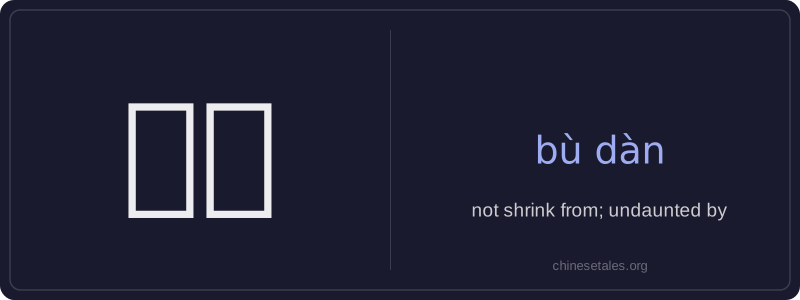
不惮 is a literary, formal verb meaning 'not to shrink from' or 'to be undaunted by'—it expresses resolute courage in the face of difficulty, danger, or hardship. The character 不 (bù) means 'not', and 惮 (dàn) means 'to fear' or 'to hesitate due to apprehension'; together, they form a compact, classical expression conveying steadfastness without timidity. It is rarely used in casual speech but appears frequently in essays, speeches, historical texts, and formal writing to highlight moral resolve or heroic determination.
This word often modifies verbs or follows subjects directly, typically preceding an action or challenge (e.g., 不惮艰险, 不惮牺牲). It carries a dignified, somewhat solemn tone and is commonly paired with abstract nouns like 艰险 (hardship), 牺牲 (sacrifice), or 批评 (criticism). While grammatically simple, its register makes it inappropriate for everyday conversation—it’s more at home in political rhetoric, biographical narratives, or inspirational discourse than in texting or small talk.
Example Sentences
Related Words
国语
‘Guó yǔ’ literally means 'national language'—
无论谁
‘无论谁’ (wú lùn shéi) is a pronoun meaning
不对
不对 (bù duì) literally combines 不 (bù), meani
外语
‘外语’ literally means ‘outside language’ —
违规
违规 (wéi guī) literally means 'to violate rules
我的
我的 (wǒ de) is a possessive pronoun meaning 'my'
亲笔
‘亲笔’ literally means ‘one’s own hand’—comb
面条
‘面条’ (miàn tiáo) literally means ‘flour str