Word Explanation
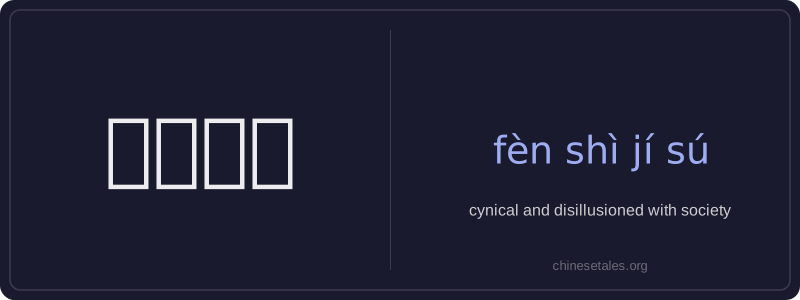
‘Fèn shì jí sú’ describes a deep, bitter disillusionment with society and its conventions—someone who feels anger toward the world (愤世) and contempt for vulgar or hypocritical social norms (嫉俗). The four characters combine two parallel verb-object phrases: ‘fèn shì’ (to resent the world) and ‘jí sú’ (to detest the vulgar/commonplace), forming a fixed, literary idiom. It conveys more than simple skepticism; it implies moral outrage, intellectual alienation, and often a sense of superiority or withdrawal.
This term is commonly used to describe writers, intellectuals, or artists whose work reflects sharp social criticism—think of satirical novelists or disillusioned poets. It appears frequently in literary criticism, biographies, and discussions of modern Chinese thought. While historically associated with Confucian scholars protesting corruption, today it’s applied more broadly to anyone exhibiting sustained, principled cynicism—not just temporary frustration or casual sarcasm.
Example Sentences
Related Words
国语
‘Guó yǔ’ literally means 'national language'—
无论谁
‘无论谁’ (wú lùn shéi) is a pronoun meaning
不对
不对 (bù duì) literally combines 不 (bù), meani
外语
‘外语’ literally means ‘outside language’ —
违规
违规 (wéi guī) literally means 'to violate rules
我的
我的 (wǒ de) is a possessive pronoun meaning 'my'
亲笔
‘亲笔’ literally means ‘one’s own hand’—comb
面条
‘面条’ (miàn tiáo) literally means ‘flour str