Word Explanation
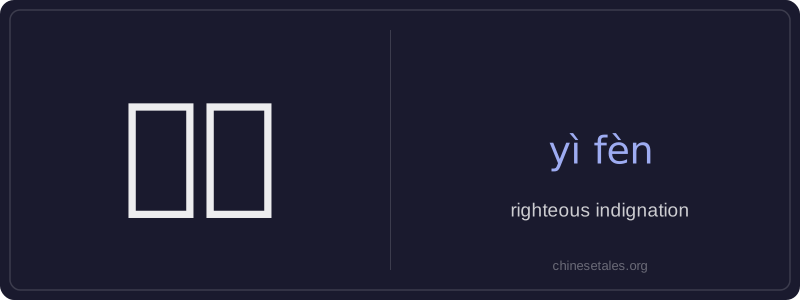
‘义愤’ (yì fèn) is a compound noun meaning ‘righteous indignation’—a strong, morally grounded anger directed at injustice, cruelty, or wrongdoing. The first character 义 (yì) means ‘righteousness,’ ‘justice,’ or ‘moral principle,’ while 愤 (fèn) means ‘indignation,’ ‘anger,’ or ‘resentment.’ Together, they convey anger that arises not from personal grievance but from a sense of ethical duty and empathy for others.
This word is formal and literary, commonly found in written Chinese—such as news reports, editorials, historical narratives, or speeches—and less frequent in casual spoken conversation. It often describes collective emotional responses to social injustice, corruption, or violations of human dignity. Because it carries moral weight, using ‘义愤’ implies the speaker endorses the cause behind the anger, distinguishing it from mere anger (生气) or outrage (愤怒) without moral justification.
Example Sentences
Related Words
国语
‘Guó yǔ’ literally means 'national language'—
无论谁
‘无论谁’ (wú lùn shéi) is a pronoun meaning
不对
不对 (bù duì) literally combines 不 (bù), meani
外语
‘外语’ literally means ‘outside language’ —
违规
违规 (wéi guī) literally means 'to violate rules
我的
我的 (wǒ de) is a possessive pronoun meaning 'my'
亲笔
‘亲笔’ literally means ‘one’s own hand’—comb
面条
‘面条’ (miàn tiáo) literally means ‘flour str