Word Explanation
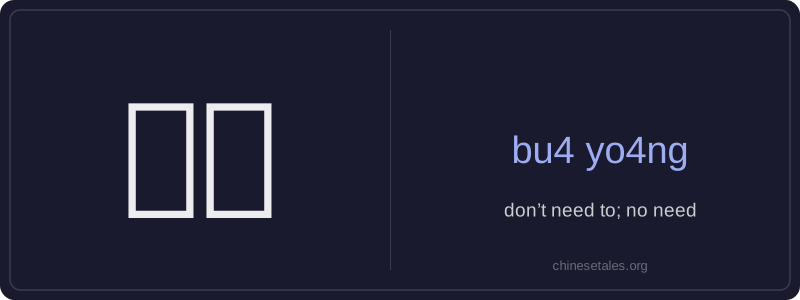
‘不用’ (bù yòng) literally combines ‘not’ (不) and ‘to use/need’ (用), forming a common two-character expression meaning ‘don’t need to’ or ‘no need’. It functions primarily as a verb phrase expressing the absence of necessity, but often acts adverbially to modify verbs — for example, ‘不用谢’ (no need to thank me). It’s frequently used in polite, everyday interactions to soften refusals, decline offers, or reassure others that an action isn’t required.
This phrase is highly conversational and appears across contexts like hospitality, service encounters, and casual requests. Unlike formal alternatives such as ‘无需’ (wúxū), ‘不用’ is neutral-to-informal and appropriate for speaking with friends, colleagues, or strangers alike. It typically precedes the verb it negates (e.g., 不用担心, 不用着急), and cannot be used with aspect particles like 了 or 过 — it stands independently before the main verb without tense marking.
Example Sentences
Related Words
我的
我的 (wǒ de) is a possessive pronoun meaning 'my'
红色的
红色的 (hóng sè de) is an adjective meaning 'red
在家
'Zài jiā' literally combines the preposition 'z
学校的
'学校的' is a possessive phrase meaning 'school's'
大的
大的 (dà de) is the attributive form of the adjec
不对
不对 (bù duì) literally combines 不 (bù), meani
不要
'不要' (bù yào) is a two-character verb phrase m
你的
你的 (nǐ de) is a possessive pronoun meaning 'you