Word Explanation
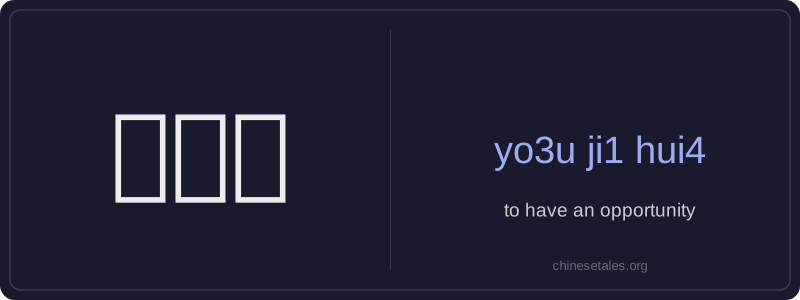
‘有机会’ literally combines three characters: 有 (yǒu, 'to have'), 机 (jī, short for 机会 jīhuì, 'chance' or 'opportunity'), and 会 (huì, here part of the compound 机会 meaning 'opportunity'). Together, it means 'to have an opportunity' — implying that circumstances allow for a particular action or experience. It is not a noun itself but functions as a verb phrase expressing possibility grounded in real conditions.
This phrase is commonly used in everyday speech to talk about realistic chances — such as studying abroad, meeting someone, trying something new, or improving a skill. It often appears with verbs like 去 (qù, 'to go'), 学习 (xuéxí, 'to study'), or 尝试 (chángshì, 'to try') to form structures like '有机会去做某事' ('have the opportunity to do something'). Unlike abstract wishes, 有机会 suggests tangible feasibility — e.g., time, resources, or permission are available.
Example Sentences
Related Words
我的
我的 (wǒ de) is a possessive pronoun meaning 'my'
在家
'Zài jiā' literally combines the preposition 'z
红色的
红色的 (hóng sè de) is an adjective meaning 'red
一天
‘一天’ literally combines the numeral ‘一’ (y
不对
不对 (bù duì) literally combines 不 (bù), meani
不要
'不要' (bù yào) is a two-character verb phrase m
学校的
'学校的' is a possessive phrase meaning 'school's'
大的
大的 (dà de) is the attributive form of the adjec