Word Explanation
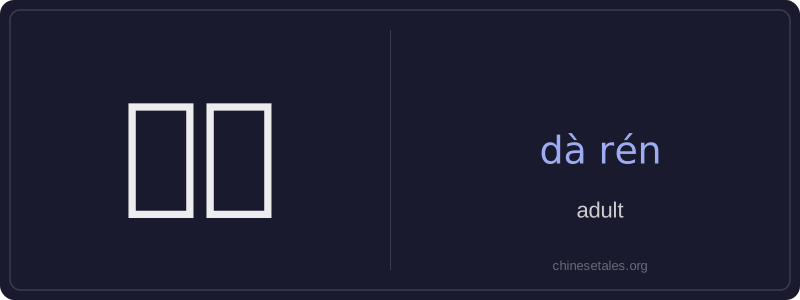
大人 (dà rén) literally combines 大 (dà, 'big' or 'great') and 人 (rén, 'person'), forming a compound meaning 'adult' — a fully grown, mature person. Unlike English 'adult', which is strictly biological/legal, 大人 carries subtle connotations of responsibility, social maturity, and sometimes respectful distance. It’s commonly used in contrast with 小孩 (xiǎo hái, 'child') to mark age-based social roles.
The term appears frequently in daily life: in schools when addressing students’ parents ('家长是大人'), in public announcements ('请大人照看好儿童'), and in polite speech when referring to elders or authority figures. Though historically used as an honorific for officials, today’s standard usage focuses on age and maturity rather than status. Note that it’s rarely used as a direct form of address (e.g., you wouldn’t say 'Hello,大人!') unless in historical drama or very formal ceremonial contexts.
Example Sentences
Related Words
我的
我的 (wǒ de) is a possessive pronoun meaning 'my'
在家
'Zài jiā' literally combines the preposition 'z
红色的
红色的 (hóng sè de) is an adjective meaning 'red
一天
‘一天’ literally combines the numeral ‘一’ (y
不对
不对 (bù duì) literally combines 不 (bù), meani
不要
'不要' (bù yào) is a two-character verb phrase m
学校的
'学校的' is a possessive phrase meaning 'school's'
大的
大的 (dà de) is the attributive form of the adjec