Word Explanation
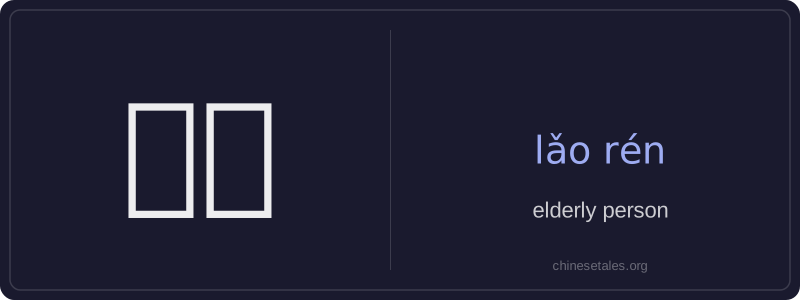
老人 literally combines 老 (lǎo, 'old') and 人 (rén, 'person'), meaning 'elderly person' or 'senior citizen'. It is a neutral, respectful term used in everyday speech and formal contexts to refer to people typically aged 60 or older. Unlike more clinical terms like 老年人 (lǎo nián rén), 老人 is warmer and more commonly used in family, community, and service settings — for example, when discussing care, respect, or social support.
The word carries cultural weight in Chinese society, where filial piety (xiào) emphasizes honoring elders. It appears frequently in public signage (e.g., 老人专座 'priority seating for seniors'), health campaigns, and news reports about aging populations. While not inherently honorific like 您老人家 (nín lǎo rén jiā), it conveys dignity and is never used pejoratively — unlike slang terms such as 老头 (lǎo tóu) or 老太婆 (lǎo tài po), which can sound dismissive depending on context.
Example Sentences
Related Words
我的
我的 (wǒ de) is a possessive pronoun meaning 'my'
在家
'Zài jiā' literally combines the preposition 'z
红色的
红色的 (hóng sè de) is an adjective meaning 'red
一天
‘一天’ literally combines the numeral ‘一’ (y
不对
不对 (bù duì) literally combines 不 (bù), meani
不要
'不要' (bù yào) is a two-character verb phrase m
学校的
'学校的' is a possessive phrase meaning 'school's'
大的
大的 (dà de) is the attributive form of the adjec