Word Explanation
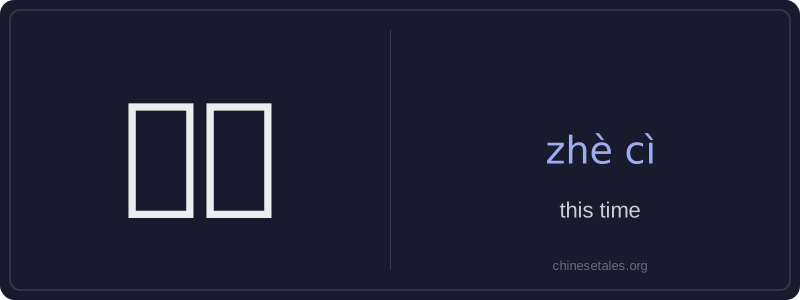
'这次' (zhè cì) literally combines '这' (zhè), meaning 'this', and '次' (cì), a measure word for occurrences or instances — together, they form the phrase 'this time'. It functions primarily as a temporal noun referring to a specific, identifiable occasion in the immediate context, but it frequently acts adverbially to modify verbs, indicating when an action happens — e.g., '这次我去了公园' ('This time I went to the park').
It’s commonly used in spoken and written Chinese to contrast with past or future events (e.g., '上次' / '下次'), making it essential for sequencing experiences. Unlike standalone pronouns, '这次' always points to a concrete, contextually understood event — not an abstract or hypothetical one — and rarely stands alone without a verb or clause. It carries neutral register and is appropriate in both casual conversation and formal writing when referencing a particular instance.
Example Sentences
Related Words
我的
我的 (wǒ de) is a possessive pronoun meaning 'my'
在家
'Zài jiā' literally combines the preposition 'z
红色的
红色的 (hóng sè de) is an adjective meaning 'red
一天
‘一天’ literally combines the numeral ‘一’ (y
不对
不对 (bù duì) literally combines 不 (bù), meani
不要
'不要' (bù yào) is a two-character verb phrase m
学校的
'学校的' is a possessive phrase meaning 'school's'
大的
大的 (dà de) is the attributive form of the adjec