Word Explanation
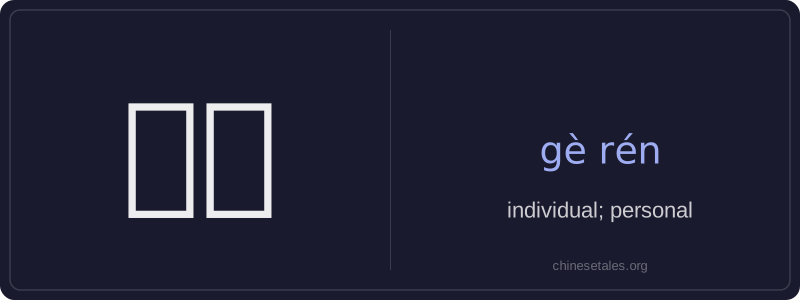
个人 (gè rén) literally combines 个 (gè), a common measure word meaning 'a' or 'one', and 人 (rén), meaning 'person'. Together, it means 'individual'—emphasizing a single person as distinct from a group—and 'personal', referring to matters belonging to or concerning oneself. It’s frequently used in formal and neutral contexts, such as official documents, workplace communication, or daily conversation about rights, responsibilities, or preferences.
The word functions flexibly: as a noun ('every individual'), it often appears with quantifiers like 每 (měi, 'each') or 一 (yī, 'a'); as an adjective ('personal'), it modifies nouns directly (e.g., 个人意见, 'personal opinion'). Unlike the more colloquial 我自己 (wǒ zìjǐ, 'myself'), 个人 carries a slightly formal or institutional tone and is rarely used in intimate or emotional expressions.
Example Sentences
Related Words
我的
我的 (wǒ de) is a possessive pronoun meaning 'my'
中国
‘Zhōngguó’ literally means ‘Middle Kingdom’
在家
'Zài jiā' literally combines the preposition 'z
中学
'Zhōngxué' literally combines 'zhōng' (middle)
红色的
红色的 (hóng sè de) is an adjective meaning 'red
一天
‘一天’ literally combines the numeral ‘一’ (y
不对
不对 (bù duì) literally combines 不 (bù), meani
不要
'不要' (bù yào) is a two-character verb phrase m