Word Explanation
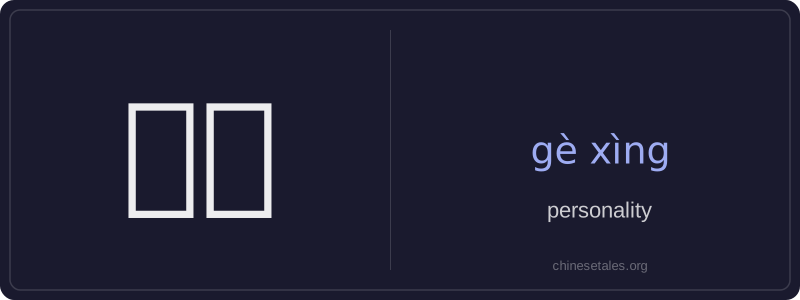
'个性' (gè xìng) literally combines '个' (gè), meaning 'individual' or 'each', and '性' (xìng), meaning 'nature' or 'character'. Together, they form the abstract noun 'personality' — the distinctive set of qualities, behaviors, attitudes, and traits that make a person (or sometimes an animal or brand) unique. It emphasizes individuality, personal style, and inherent disposition rather than surface-level traits.
This word is commonly used in psychological, educational, social, and everyday contexts — for example, when praising someone’s confidence ('有个性'), describing cultural differences in self-expression, or discussing how upbringing shapes personality development. Unlike the more clinical term '性格' (xìng gé), which focuses on temperament and emotional tendencies, '个性' highlights uniqueness, originality, and self-assertion — often with positive connotations of authenticity and independence.
Example Sentences
Related Words
我的
我的 (wǒ de) is a possessive pronoun meaning 'my'
中国
‘Zhōngguó’ literally means ‘Middle Kingdom’
在家
'Zài jiā' literally combines the preposition 'z
中学
'Zhōngxué' literally combines 'zhōng' (middle)
红色的
红色的 (hóng sè de) is an adjective meaning 'red
一天
‘一天’ literally combines the numeral ‘一’ (y
不对
不对 (bù duì) literally combines 不 (bù), meani
不要
'不要' (bù yào) is a two-character verb phrase m