Word Explanation
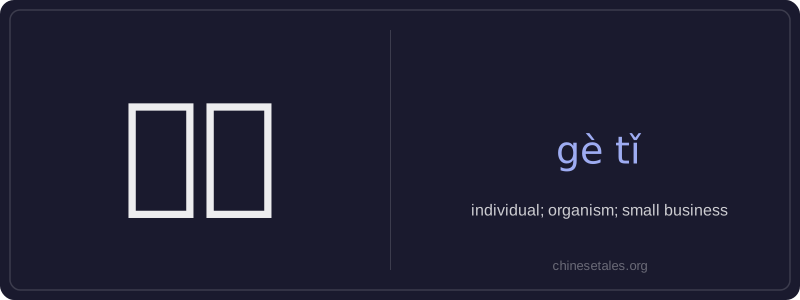
个体 literally combines 个 (gè), a general classifier meaning 'a' or 'one', and 体 (tǐ), meaning 'body' or 'entity'. Together, they form a noun meaning 'individual' — emphasizing a single, distinct unit within a larger group. In biology, it refers to a single living organism (e.g., one animal or plant), contrasting with populations or species. This usage is common in scientific, ecological, or medical contexts when discussing traits, behavior, or health at the level of a single being.
In economics and daily life, 个体 also denotes a small, privately run business — short for 个体工商户 (gètǐ gōngshāng hù), meaning 'individual industrial and commercial household'. These are sole proprietorships, like family-run shops or street vendors. Though homographic, this sense arises from the idea of a single-person-operated entity, not a biological organism. Context always clarifies which meaning applies.
Example Sentences
Related Words
我的
我的 (wǒ de) is a possessive pronoun meaning 'my'
中国
‘Zhōngguó’ literally means ‘Middle Kingdom’
在家
'Zài jiā' literally combines the preposition 'z
中学
'Zhōngxué' literally combines 'zhōng' (middle)
红色的
红色的 (hóng sè de) is an adjective meaning 'red
一天
‘一天’ literally combines the numeral ‘一’ (y
不对
不对 (bù duì) literally combines 不 (bù), meani
不要
'不要' (bù yào) is a two-character verb phrase m