Word Explanation
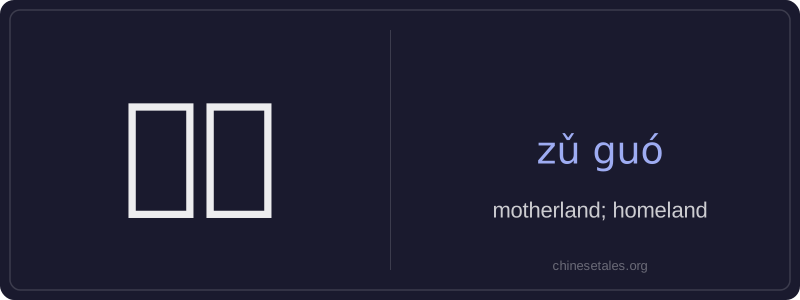
‘Zǔguó’ (祖国) literally combines ‘zǔ’ (祖), meaning ‘ancestor’ or ‘origin,’ and ‘guó’ (国), meaning ‘country’ or ‘nation.’ Together, it conveys a deep emotional and cultural connection to one’s native land — not just the geographic territory, but the historical, linguistic, and ancestral home of a people. It carries strong patriotic and sentimental weight, often used in formal speeches, national celebrations, literature, and personal expressions of identity and belonging.
Unlike neutral terms like ‘guójiā’ (country/state), ‘zǔguó’ evokes reverence and affection — similar to ‘motherland’ in English, with implied nurturing, continuity, and moral duty. It is almost exclusively used for one’s own nation (e.g., Chinese speakers refer to China as their zǔguó), never for foreign countries. The term appears frequently in slogans, songs, and education, reinforcing collective memory and civic loyalty.
Example Sentences
Related Words
我的
我的 (wǒ de) is a possessive pronoun meaning 'my'
中国
‘Zhōngguó’ literally means ‘Middle Kingdom’
在家
'Zài jiā' literally combines the preposition 'z
中学
'Zhōngxué' literally combines 'zhōng' (middle)
红色的
红色的 (hóng sè de) is an adjective meaning 'red
一天
‘一天’ literally combines the numeral ‘一’ (y
不对
不对 (bù duì) literally combines 不 (bù), meani
不要
'不要' (bù yào) is a two-character verb phrase m