Word Explanation
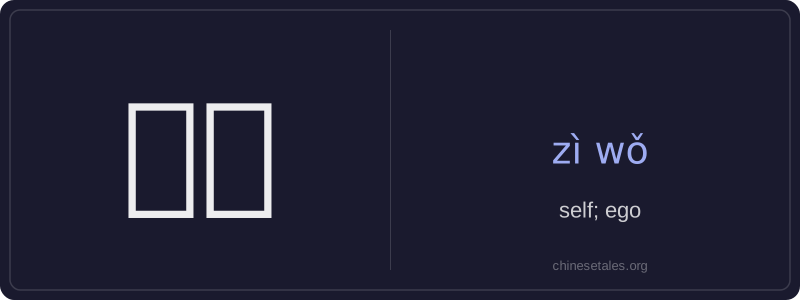
自我 (zì wǒ) literally means 'self'—combining 自 (zì), meaning 'self' or 'one's own', and 我 (wǒ), meaning 'I' or 'me'. Together, they form a formal, abstract noun referring to the psychological or philosophical concept of the self—the core identity, consciousness, or ego. It’s commonly used in psychology, philosophy, education, and self-improvement contexts, rather than in casual daily speech.
In Chinese, 自我 often appears in compound words like 自我意识 (zì wǒ yì shí, 'self-awareness'), 自我评价 (zì wǒ píng jià, 'self-evaluation'), or 自我提升 (zì wǒ tí shēng, 'self-improvement'). Unlike the simple pronoun 我, which refers directly to the speaker, 自我 emphasizes reflection, introspection, or the internalized concept of identity—not just 'I' but 'the self as an object of thought or development'.
Example Sentences
Related Words
我的
我的 (wǒ de) is a possessive pronoun meaning 'my'
中国
‘Zhōngguó’ literally means ‘Middle Kingdom’
在家
'Zài jiā' literally combines the preposition 'z
中学
'Zhōngxué' literally combines 'zhōng' (middle)
红色的
红色的 (hóng sè de) is an adjective meaning 'red
一天
‘一天’ literally combines the numeral ‘一’ (y
不对
不对 (bù duì) literally combines 不 (bù), meani
不要
'不要' (bù yào) is a two-character verb phrase m