Word Explanation
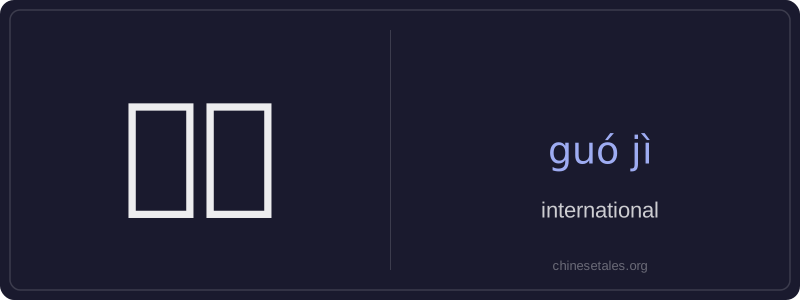
国际 (guó jì) literally means 'nation-to-nation' — 国 ('country') and 际 ('between, among, at the boundary'). Together, it functions as an adjective meaning 'international', describing things that involve or connect two or more countries. It commonly modifies nouns such as 组织 (organization), 关系 (relations), 会议 (conference), or 贸易 (trade).
This term is widely used in formal, academic, diplomatic, and media contexts — for example, in news reports, policy documents, or educational materials. Unlike colloquial alternatives like 世界性的 (shìjiè xìng de, 'worldwide'), 国际 carries a precise, institutional nuance emphasizing cross-national cooperation, standards, or frameworks. It rarely stands alone as a noun; instead, it almost always appears before a noun it modifies.
Example Sentences
Related Words
我的
我的 (wǒ de) is a possessive pronoun meaning 'my'
中国
‘Zhōngguó’ literally means ‘Middle Kingdom’
在家
'Zài jiā' literally combines the preposition 'z
中学
'Zhōngxué' literally combines 'zhōng' (middle)
红色的
红色的 (hóng sè de) is an adjective meaning 'red
一天
‘一天’ literally combines the numeral ‘一’ (y
不对
不对 (bù duì) literally combines 不 (bù), meani
不要
'不要' (bù yào) is a two-character verb phrase m