Word Explanation
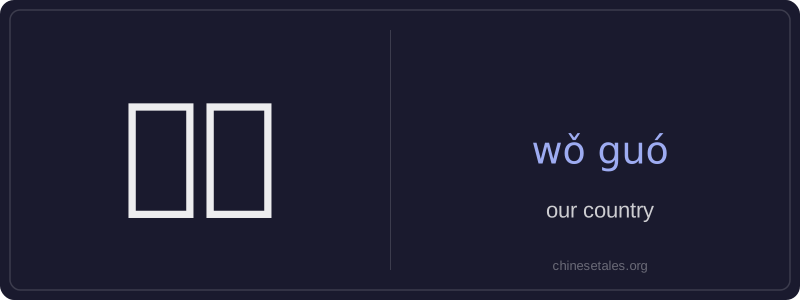
我国 literally means 'I country' — combining 我 (wǒ, 'I' or 'we') and 国 (guó, 'country' or 'nation'). Together, it functions as a formal, respectful, and patriotic way to refer to one's own country, especially in official, academic, or media contexts. Unlike the neutral term 'China' (中国) or the colloquial 'our country' (咱们国家), 我国 carries a tone of collective identity and institutional authority, often used by government bodies, news reports, textbooks, or policy documents.
It is not used in casual speech among friends or family — saying '我国 has beautiful mountains' in everyday conversation would sound stiff or overly solemn. Instead, speakers might say '我们国家' or simply '中国'. The word implies shared citizenship and national pride, and is typically reserved for contexts where the speaker represents or speaks on behalf of the nation — such as in diplomatic statements, economic analyses, or historical narratives.
Example Sentences
Related Words
我的
我的 (wǒ de) is a possessive pronoun meaning 'my'
中国
‘Zhōngguó’ literally means ‘Middle Kingdom’
在家
'Zài jiā' literally combines the preposition 'z
中学
'Zhōngxué' literally combines 'zhōng' (middle)
红色的
红色的 (hóng sè de) is an adjective meaning 'red
一天
‘一天’ literally combines the numeral ‘一’ (y
不对
不对 (bù duì) literally combines 不 (bù), meani
不要
'不要' (bù yào) is a two-character verb phrase m