Word Explanation
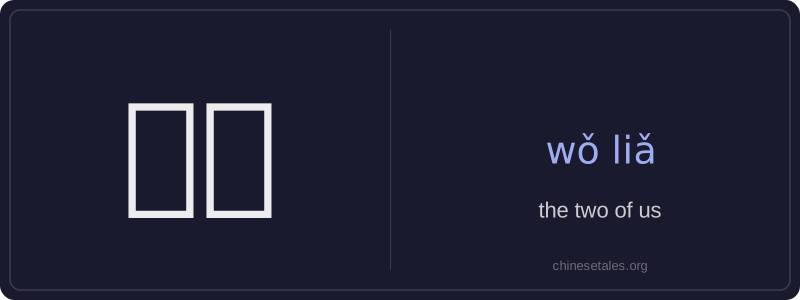
‘我俩’ (wǒ liǎ) is an informal, spoken pronoun meaning ‘the two of us’ — specifically referring to the speaker and one other person. It combines 我 (wǒ, ‘I/me’) with 俩 (liǎ), a colloquial numeral meaning ‘two’ that functions as a measure word + noun suffix, often replacing ‘两个’ (liǎng gè) in personal contexts. Unlike formal alternatives like ‘我们俩’ (wǒmen liǎ), ‘我俩’ drops the plural marker 们, making it more intimate and conversational.
This term is commonly used among close friends, family members, or romantic partners when emphasizing a shared experience or mutual action — for example, planning something together, recalling a memory, or expressing joint responsibility. It carries warmth and familiarity, and is rarely used in writing or formal speech. Note that 俩 always implies exactly two people and cannot refer to groups larger than two; it also cannot stand alone without a preceding pronoun like 我, 你, or 他.
Example Sentences
Related Words
我的
我的 (wǒ de) is a possessive pronoun meaning 'my'
中国
‘Zhōngguó’ literally means ‘Middle Kingdom’
在家
'Zài jiā' literally combines the preposition 'z
中学
'Zhōngxué' literally combines 'zhōng' (middle)
红色的
红色的 (hóng sè de) is an adjective meaning 'red
一天
‘一天’ literally combines the numeral ‘一’ (y
不对
不对 (bù duì) literally combines 不 (bù), meani
不要
'不要' (bù yào) is a two-character verb phrase m