Word Explanation
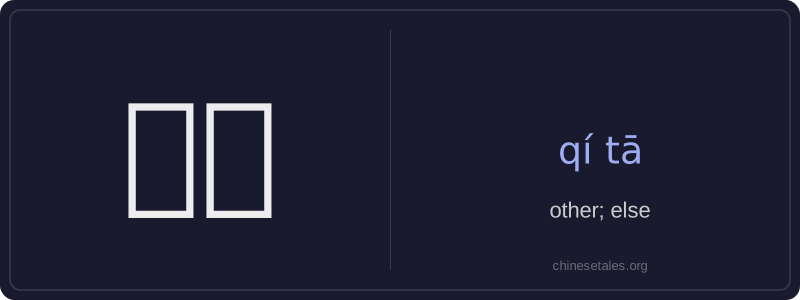
其他 (qí tā) means 'other' or 'else' and functions as a noun or pronoun to refer to additional people, things, or categories not previously specified. The character 其 (qí) is a classical pronoun meaning 'its', 'his', 'her', or 'their', while 他 (tā) means 'he', 'she', or 'it' — together, they form a compound meaning 'the other (ones)' or 'others'. Unlike English 'other', which often requires a noun (e.g., 'other animals'), 其他 can stand alone as a noun ('others') or modify a noun directly ('other animals').
It commonly appears in comparisons, lists, or generalizations — for example, when distinguishing one item from the rest of a group. It’s neutral in register and widely used in both spoken and written Chinese. Note that 其他 always modifies a noun or stands in place of a plural noun; it cannot be used before a singular countable noun without a classifier or measure word (e.g., you say 其他动物, not *其他狗). It’s frequently used in contexts involving categories, such as animal species, people, objects, or options.
Example Sentences
Related Words
我的
我的 (wǒ de) is a possessive pronoun meaning 'my'
中国
‘Zhōngguó’ literally means ‘Middle Kingdom’
在家
'Zài jiā' literally combines the preposition 'z
中学
'Zhōngxué' literally combines 'zhōng' (middle)
红色的
红色的 (hóng sè de) is an adjective meaning 'red
一天
‘一天’ literally combines the numeral ‘一’ (y
不对
不对 (bù duì) literally combines 不 (bù), meani
不要
'不要' (bù yào) is a two-character verb phrase m