Word Explanation
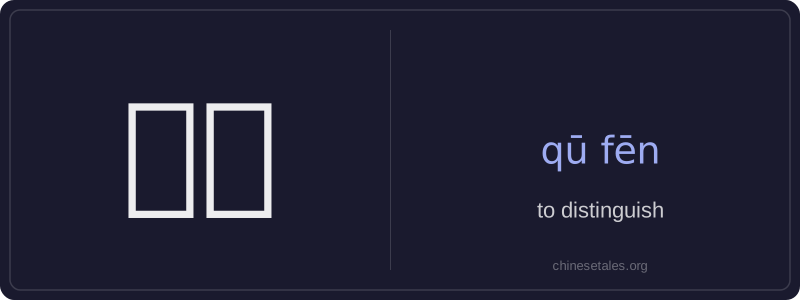
区分 (qū fēn) is a verb meaning 'to distinguish' or 'to differentiate' — that is, to recognize and separate things based on their differences. The first character 区 (qū) originally means 'region' or 'area', but in this compound it contributes the sense of 'categorizing' or 'demarcating'; 分 (fēn) means 'to divide' or 'to separate'. Together, they form a formal, standard term used when identifying meaningful distinctions between similar items, concepts, or categories — such as distinguishing facts from opinions, real from fake, or two closely related species.
This word appears frequently in academic, scientific, and everyday contexts where clarity and precision matter. It often follows subjects like 我们 (we), 专家 (experts), or 机器 (machines), and commonly takes a direct object introduced by the particle 把 or appears before 的 to modify nouns (e.g., 区分标准 'criteria for distinction'). While it can be used transitively ('distinguish A from B'), it’s more typical to say 区分A和B or 区分A与B rather than using a preposition like 'between'.
Example Sentences
Related Words
我的
我的 (wǒ de) is a possessive pronoun meaning 'my'
中国
‘Zhōngguó’ literally means ‘Middle Kingdom’
一天
‘一天’ literally combines the numeral ‘一’ (y
在家
'Zài jiā' literally combines the preposition 'z
不要
'不要' (bù yào) is a two-character verb phrase m
这边
这边 (zhè biān) literally combines 这 (zhè, 'th
这么
这么 (zhè me) is an adverb meaning 'so' or 'this
中学
'Zhōngxué' literally combines 'zhōng' (middle)