Word Explanation
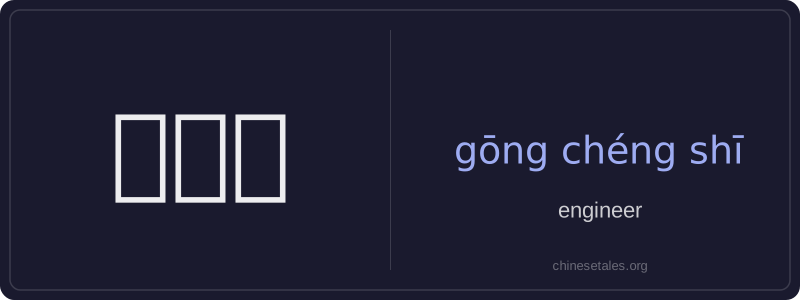
工程师 (gōng chéng shī) literally means 'work-project-teacher' — a compound noun where 工 (gōng) refers to work or craft, 程 (chéng) means project, process, or procedure, and 师 (shī) denotes a master, expert, or professional teacher. Together, the term signifies a highly trained professional who applies scientific and mathematical principles to design, build, operate, or maintain structures, machines, systems, or processes.
This word is used broadly across technical fields — such as civil, mechanical, software, electrical, and chemical engineering — and always implies formal education, technical expertise, and professional responsibility. Unlike generic terms like 技术员 (technician), 工程师 carries connotations of licensure, advanced problem-solving ability, and leadership in technical projects. It’s commonly used in job titles, official documents, company hierarchies, and academic contexts in China and other Chinese-speaking regions.
Example Sentences
Related Words
我的
我的 (wǒ de) is a possessive pronoun meaning 'my'
中国
‘Zhōngguó’ literally means ‘Middle Kingdom’
不对
不对 (bù duì) literally combines 不 (bù), meani
学校的
'学校的' is a possessive phrase meaning 'school's'
一天
‘一天’ literally combines the numeral ‘一’ (y
在家
'Zài jiā' literally combines the preposition 'z
不要
'不要' (bù yào) is a two-character verb phrase m
这边
这边 (zhè biān) literally combines 这 (zhè, 'th