Word Explanation
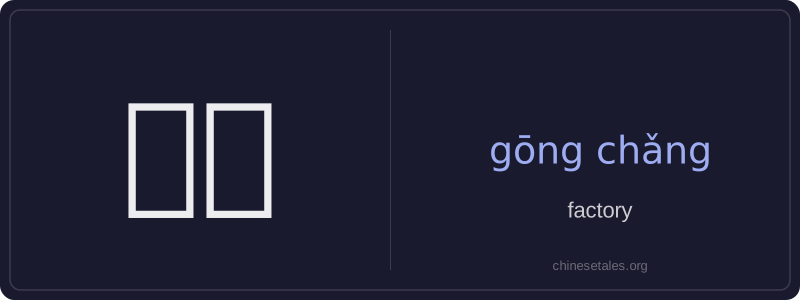
工厂 (gōng chǎng) literally combines 工 (gōng), meaning 'work' or 'craft', and 厂 (chǎng), meaning 'plant' or 'workshop'. Together, they form the standard Mandarin term for a facility where goods are manufactured or assembled—essentially, a factory. It refers to industrial sites ranging from small workshops to large-scale production complexes, and is used in both formal and everyday contexts.
This word appears frequently in discussions about industry, employment, urban development, and environmental issues. Unlike more specialized terms like 车间 (chē jiān, 'workshop') or 制造厂 (zhì zào chǎng, 'manufacturing plant'), 工厂 is broad and neutral, applicable to any production-oriented facility—whether making electronics, textiles, or machinery. It’s also commonly used in compound nouns like 食品工厂 (shí pǐn gōng chǎng, 'food factory') or 汽车工厂 (qì chē gōng chǎng, 'automobile factory').
Example Sentences
Related Words
我的
我的 (wǒ de) is a possessive pronoun meaning 'my'
中国
‘Zhōngguó’ literally means ‘Middle Kingdom’
不对
不对 (bù duì) literally combines 不 (bù), meani
学校的
'学校的' is a possessive phrase meaning 'school's'
一天
‘一天’ literally combines the numeral ‘一’ (y
在家
'Zài jiā' literally combines the preposition 'z
不要
'不要' (bù yào) is a two-character verb phrase m
这边
这边 (zhè biān) literally combines 这 (zhè, 'th