Word Explanation
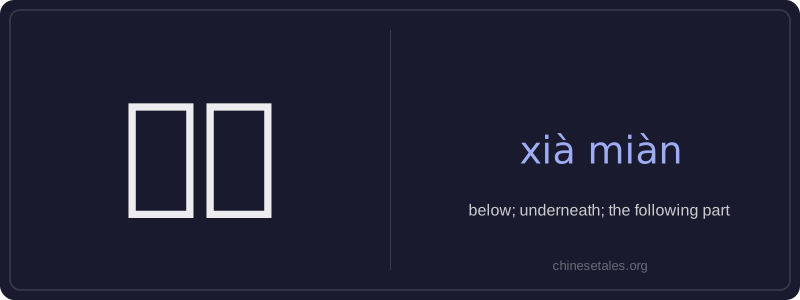
'下面' (xià miàn) literally combines '下' (xià), meaning 'down' or 'below', and '面' (miàn), meaning 'surface' or 'side'. Together, it denotes the physical space directly beneath something — like the underside of a table or the ground under a tree. It’s used both literally (spatial positioning) and abstractly (to refer to what follows in text, speech, or sequence).
In everyday usage, '下面' functions as a noun ('the part below') or an adverb ('below' or 'next'). As a noun, it often appears with classifiers like '这' (this) or '那' (that): '这下面' (this below). As an adverb, it commonly introduces the next item in a list or explanation: '下面请看第二点' (Next, let’s look at point two). It’s neutral in register and widely used across spoken and written Chinese, from giving directions to structuring presentations.
Example Sentences
Related Words
我的
我的 (wǒ de) is a possessive pronoun meaning 'my'
中国
‘Zhōngguó’ literally means ‘Middle Kingdom’
不对
不对 (bù duì) literally combines 不 (bù), meani
红色的
红色的 (hóng sè de) is an adjective meaning 'red
学校的
'学校的' is a possessive phrase meaning 'school's'
一天
‘一天’ literally combines the numeral ‘一’ (y
在家
'Zài jiā' literally combines the preposition 'z
不要
'不要' (bù yào) is a two-character verb phrase m