Word Explanation
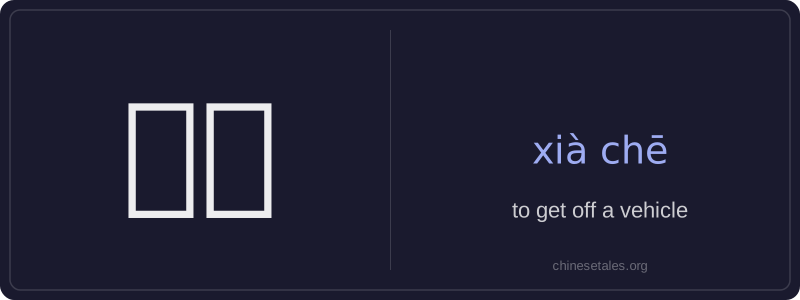
下车 (xià chē) literally means 'down + vehicle' and functions as a verb meaning 'to get off a vehicle' — most commonly buses, trains, subways, or taxis. The character 下 (xià) conveys downward movement or departure from a position, while 车 (chē) means 'vehicle' or 'car'. Together, they form a compound verb describing the physical action of exiting a moving or parked vehicle. It’s used in both formal and everyday speech, and is often paired with time or location phrases to specify when or where someone disembarks.
This verb follows standard Chinese verb-complement structure and typically appears after the subject and before objects or directional complements (e.g., 下车后 'after getting off'). Unlike English, it doesn’t require auxiliary verbs like 'do' or 'will' — tense is inferred from context or time words (e.g., 明天下车 'get off tomorrow'). It’s not used for airplanes (where 下飞机 xià fēijī is standard) or bicycles (where you simply say 下自行车 xià zìxíngchē).
Example Sentences
Related Words
我的
我的 (wǒ de) is a possessive pronoun meaning 'my'
中国
‘Zhōngguó’ literally means ‘Middle Kingdom’
不对
不对 (bù duì) literally combines 不 (bù), meani
红色的
红色的 (hóng sè de) is an adjective meaning 'red
学校的
'学校的' is a possessive phrase meaning 'school's'
一天
‘一天’ literally combines the numeral ‘一’ (y
在家
'Zài jiā' literally combines the preposition 'z
不要
'不要' (bù yào) is a two-character verb phrase m