Word Explanation
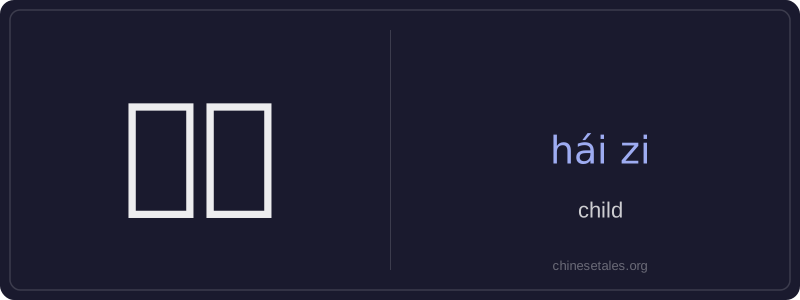
孩子 (hái zi) means 'child' — a general, warm, and commonly used term for a young person, typically under 18. The first character 孩 (hái) originally meant 'infant' or 'young child', while 子 (zi) is a common nominal suffix meaning 'person' or 'offspring'; together, they form a natural, colloquial compound noun. Unlike more formal terms like 儿童 (ér tóng), 孩子 carries emotional warmth and familiarity, often used by parents, teachers, or elders when referring to children in everyday speech.
The word is grammatically flexible: it can be singular or plural depending on context (e.g., 我的孩子 'my child' vs. 孩子们都来了 'the children have all arrived'), and it frequently appears in family-related expressions, parenting advice, education discussions, and affectionate address (e.g., calling one’s own child 孩子 as a term of endearment). It is neutral in register — appropriate in both spoken and written Chinese, but rarely used in highly formal or legal documents where precise age-based terms are required.
Example Sentences
Related Words
我的
我的 (wǒ de) is a possessive pronoun meaning 'my'
中国
‘Zhōngguó’ literally means ‘Middle Kingdom’
一天
‘一天’ literally combines the numeral ‘一’ (y
不对
不对 (bù duì) literally combines 不 (bù), meani
红色的
红色的 (hóng sè de) is an adjective meaning 'red
学校的
'学校的' is a possessive phrase meaning 'school's'
在家
'Zài jiā' literally combines the preposition 'z
不要
'不要' (bù yào) is a two-character verb phrase m