Word Explanation
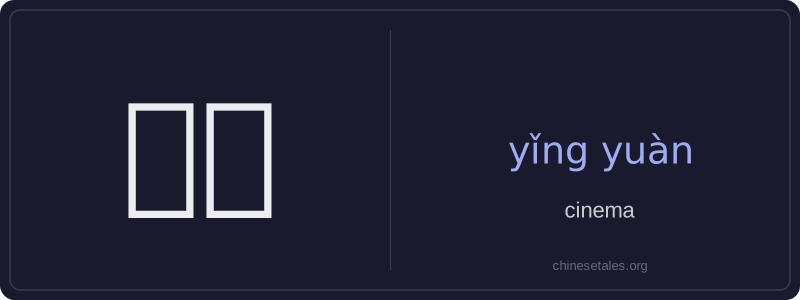
‘影院’ literally combines ‘影’ (yǐng), meaning ‘shadow’ or ‘image’, and ‘院’ (yuàn), meaning ‘courtyard’ or ‘institution’. Historically, it referred to a place where moving images were shown — hence ‘cinema’ or ‘movie theater’. It’s the standard, neutral term used across mainland China for a commercial venue screening films. Unlike more formal or literary terms like ‘电影厅’ (film hall) or colloquial abbreviations like ‘影城’ (film city, implying a large multiplex), ‘影院’ is universally understood and commonly appears in schedules, apps, and everyday conversation.
The word emphasizes function over architecture: it’s defined by its purpose — showing movies — not its size or style. You’ll see it on tickets, subway signs, and booking platforms like Maoyan or Taopiaopiao. While ‘电影院’ (with ‘电’) is slightly more explicit (‘electric cinema’), ‘影院’ is the preferred shortened form in speech and writing when context makes the meaning clear. It’s never used for home viewing or outdoor screenings — those require additional qualifiers.
Example Sentences
Related Words
见面
见面 literally means 'see face' — combining 见 (t
后来
Later (hòulái) is an adverb meaning 'afterwards'
背后
背后 literally means 'back + behind' and functions
我的
我的 (wǒ de) is a possessive pronoun meaning 'my'
这么
这么 (zhè me) is an adverb meaning 'so' or 'this
中学
'Zhōngxué' literally combines 'zhōng' (middle)
前面
前面 (qián miàn) literally combines 前 (qián, '
面条
‘面条’ (miàn tiáo) literally means ‘flour str