Word Explanation
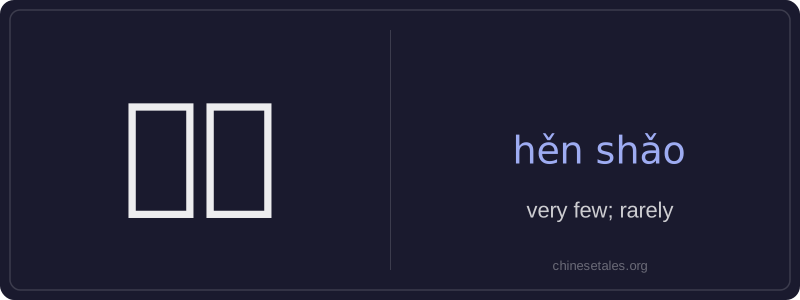
'很少' (hěn shǎo) literally combines 'very' (很) and 'few' or 'little' (少), forming an adverb meaning 'very few' when modifying nouns or 'rarely' when modifying verbs. It expresses low frequency or small quantity, always carrying a comparative or relative sense — not absolute zero, but notably infrequent or scarce. Unlike standalone '少', which can be a verb or adjective, '很少' functions almost exclusively as an adverb in modern Mandarin, typically placed before verbs or adjectives to indicate how seldom something occurs or how little there is.
This term appears frequently in daily conversation about habits, routines, and personal experiences — for example, describing how often someone eats out, travels, or sees friends. It’s neutral in register and appropriate in both spoken and written contexts, though it’s rarely used in formal academic or technical writing where more precise quantifiers (e.g., '不足5%' or '偶发') may be preferred. Its tone is descriptive rather than emotional, though context can imply disappointment or surprise depending on intonation and situation.
Example Sentences
Related Words
见面
见面 literally means 'see face' — combining 见 (t
后来
Later (hòulái) is an adverb meaning 'afterwards'
背后
背后 literally means 'back + behind' and functions
我的
我的 (wǒ de) is a possessive pronoun meaning 'my'
这么
这么 (zhè me) is an adverb meaning 'so' or 'this
中学
'Zhōngxué' literally combines 'zhōng' (middle)
前面
前面 (qián miàn) literally combines 前 (qián, '
面条
‘面条’ (miàn tiáo) literally means ‘flour str