Word Explanation
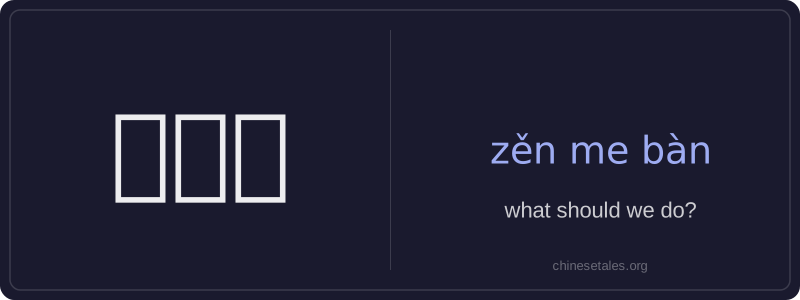
'Zěn me bàn' is an interrogative phrase literally meaning 'how to do/arrange?' but functions as a fixed expression conveying helplessness, urgency, or uncertainty in the face of a problem. Though composed of three characters — 怎 (how), 么 (a grammatical particle that forms questions with 怎), and 办 (to handle/do) — it is never used as separate lexical items here; instead, it operates as a single pragmatic unit expressing emotional reaction rather than seeking literal procedural instructions.
This phrase commonly appears in spoken Chinese when speakers confront unexpected difficulties — losing something, facing a conflict, or dealing with an urgent decision. It often implies shared concern or invites collaborative problem-solving, and may be accompanied by gestures or rising intonation. Unlike formal alternatives, it carries colloquial warmth and immediacy, making it frequent in conversations among friends, family, or colleagues under mild stress.
Example Sentences
Related Words
见面
见面 literally means 'see face' — combining 见 (t
后来
Later (hòulái) is an adverb meaning 'afterwards'
背后
背后 literally means 'back + behind' and functions
我的
我的 (wǒ de) is a possessive pronoun meaning 'my'
这么
这么 (zhè me) is an adverb meaning 'so' or 'this
中学
'Zhōngxué' literally combines 'zhōng' (middle)
前面
前面 (qián miàn) literally combines 前 (qián, '
面条
‘面条’ (miàn tiáo) literally means ‘flour str