Word Explanation
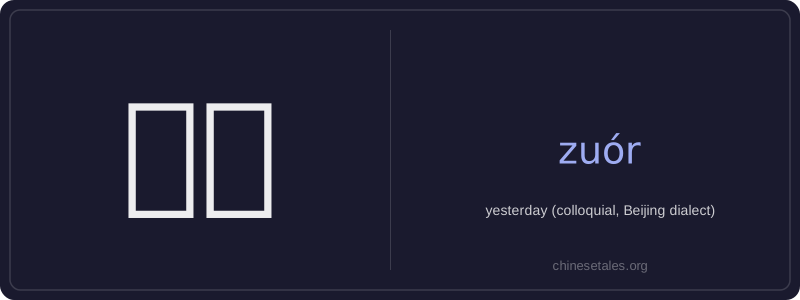
‘昨儿’ (zuór) is a colloquial, contracted form of ‘昨天’ (zuótiān), meaning ‘yesterday’. It originates from the Beijing dialect and is widely used in informal spoken Mandarin across northern China. The character 昨 means ‘previous’ or ‘last’, specifically referring to the day before today; 儿 is a diminutive suffix (the ‘erhua’ sound) that softens pronunciation and adds familiarity—not a separate word meaning ‘child’. Together, they form a single lexical unit pronounced as one syllable (zuór), not two distinct syllables.
This term appears frequently in everyday conversation, storytelling, or casual narration—especially when recounting recent events with warmth or immediacy. It’s rarely used in formal writing, news reports, or academic contexts, where ‘昨天’ remains standard. Learners should recognize it in speech and audio materials, but use ‘昨天’ in writing and formal speaking unless intentionally mimicking regional informality.
Example Sentences
Related Words
见面
见面 literally means 'see face' — combining 见 (t
后来
Later (hòulái) is an adverb meaning 'afterwards'
背后
背后 literally means 'back + behind' and functions
我的
我的 (wǒ de) is a possessive pronoun meaning 'my'
这么
这么 (zhè me) is an adverb meaning 'so' or 'this
中学
'Zhōngxué' literally combines 'zhōng' (middle)
前面
前面 (qián miàn) literally combines 前 (qián, '
面条
‘面条’ (miàn tiáo) literally means ‘flour str