Word Explanation
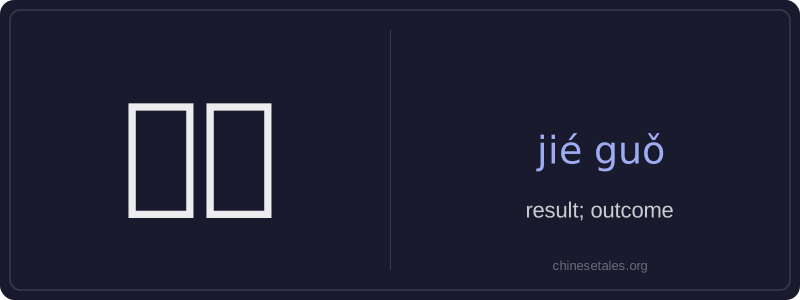
‘结果’ (jié guǒ) literally combines ‘结’ (jié), meaning ‘to tie up’ or ‘to conclude’, and ‘果’ (guǒ), meaning ‘fruit’ or ‘outcome’—together evoking the idea of something that ‘bears fruit’ or ‘comes to a conclusion’. As a noun, it primarily means ‘result’ or ‘outcome’, referring to what happens after an action, process, or event. It’s neutral in tone and widely used in both spoken and written Chinese—from everyday conversations about homework or plans to formal reports on experiments or policies.
The word often appears after phrases indicating cause or effort (e.g., ‘因为…所以…结果…’ or ‘经过…,结果…’) and can be modified by adjectives like ‘好的’ (good), ‘坏的’ (bad), or ‘意想不到的’ (unexpected). Unlike verbs such as ‘导致’ (to cause), ‘结果’ itself is not action-oriented—it names the endpoint, not the process leading to it.
Example Sentences
Related Words
见面
见面 literally means 'see face' — combining 见 (t
后来
Later (hòulái) is an adverb meaning 'afterwards'
背后
背后 literally means 'back + behind' and functions
我的
我的 (wǒ de) is a possessive pronoun meaning 'my'
这么
这么 (zhè me) is an adverb meaning 'so' or 'this
中学
'Zhōngxué' literally combines 'zhōng' (middle)
前面
前面 (qián miàn) literally combines 前 (qián, '
面条
‘面条’ (miàn tiáo) literally means ‘flour str