Word Explanation
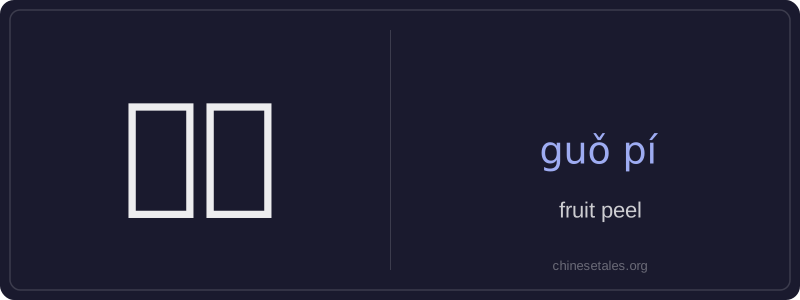
果皮 (guǒ pí) literally combines 果 (guǒ), meaning 'fruit', and 皮 (pí), meaning 'skin' or 'peel'. Together, it refers specifically to the outer covering of a fruit — such as the orange rind, banana peel, or apple skin. Unlike 皮 alone (which can refer to animal skin or other types of surface layers), 果皮 is exclusively used for edible fruits and carries no figurative or biological connotations beyond that.
This word appears frequently in daily life — especially when discussing food preparation, waste sorting (e.g., composting), health advice (e.g., washing fruit before eating), or environmental awareness (e.g., reducing plastic packaging by choosing loose fruit). It’s neutral in register, appropriate for both casual and formal contexts, and commonly taught early in Chinese language learning due to its concrete, tangible meaning and high-frequency usage in grocery, kitchen, and ecological discussions.
Example Sentences
Related Words
见面
见面 literally means 'see face' — combining 见 (t
后来
Later (hòulái) is an adverb meaning 'afterwards'
背后
背后 literally means 'back + behind' and functions
我的
我的 (wǒ de) is a possessive pronoun meaning 'my'
这么
这么 (zhè me) is an adverb meaning 'so' or 'this
中学
'Zhōngxué' literally combines 'zhōng' (middle)
前面
前面 (qián miàn) literally combines 前 (qián, '
面条
‘面条’ (miàn tiáo) literally means ‘flour str