Word Explanation
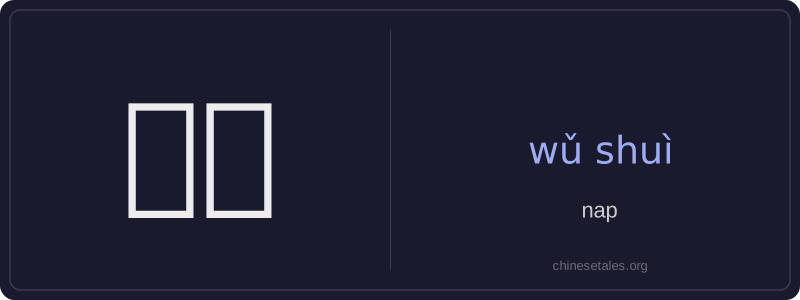
午睡 (wǔ shuì) literally means 'noon sleep' — 午 (wǔ) refers to the midday hour (traditionally the 'Horse Hour', 11 a.m. to 1 p.m. in the Chinese zodiac time system), and 睡 (shuì) means 'to sleep'. Together, they form a compound noun meaning a short, intentional sleep taken during the early afternoon, typically after lunch. This practice is deeply embedded in Chinese daily life, especially in schools, offices, and homes, where a 20–30 minute nap is widely encouraged for restoring energy and improving afternoon focus.
Unlike general terms like 小睡 (xiǎo shuì, 'a light nap'), 午睡 specifically denotes timing — it must occur around noon or early afternoon. It carries positive connotations of self-care, discipline, and cultural wisdom; many Chinese adults recall mandatory 午睡 periods in elementary school. While not strictly limited to weekdays or formal settings, it is rarely used for naps taken later in the day (e.g., at 4 p.m.) — those would be described more generally as 小睡 or 打盹 (dǎ dǔn).
Example Sentences
Related Words
见面
见面 literally means 'see face' — combining 见 (t
后来
Later (hòulái) is an adverb meaning 'afterwards'
背后
背后 literally means 'back + behind' and functions
我的
我的 (wǒ de) is a possessive pronoun meaning 'my'
这么
这么 (zhè me) is an adverb meaning 'so' or 'this
中学
'Zhōngxué' literally combines 'zhōng' (middle)
前面
前面 (qián miàn) literally combines 前 (qián, '
面条
‘面条’ (miàn tiáo) literally means ‘flour str