Word Explanation
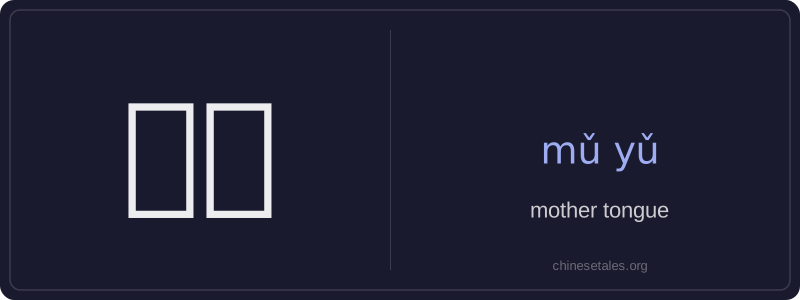
母语 literally means 'mother language' — 母 (mǔ) means 'mother', and 语 (yǔ) means 'language' or 'speech'. Together, they refer to the first language a person acquires naturally in childhood, usually from family and early environment. It’s not necessarily tied to one’s biological mother, but rather reflects the language spoken at home during formative years.
This term is commonly used in education, linguistics, and immigration contexts — for example, when discussing bilingual education, language policy, or personal identity. Unlike 'native language', which may emphasize birthplace, 母语 focuses on acquisition and emotional connection. It’s neutral in register and appropriate in both formal reports and everyday conversation, though it carries subtle cultural weight in discussions about heritage and belonging.
Example Sentences
Related Words
见面
见面 literally means 'see face' — combining 见 (t
后来
Later (hòulái) is an adverb meaning 'afterwards'
背后
背后 literally means 'back + behind' and functions
我的
我的 (wǒ de) is a possessive pronoun meaning 'my'
这么
这么 (zhè me) is an adverb meaning 'so' or 'this
中学
'Zhōngxué' literally combines 'zhōng' (middle)
前面
前面 (qián miàn) literally combines 前 (qián, '
面条
‘面条’ (miàn tiáo) literally means ‘flour str