Word Explanation
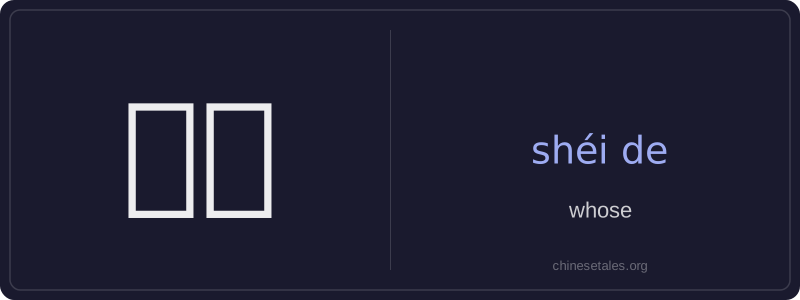
谁的 (shéi de) is a possessive interrogative pronoun meaning 'whose' in English. It is formed by combining 谁 (shéi), meaning 'who', with the possessive particle 的 (de), which marks ownership or association. Unlike English, where 'whose' stands alone, Chinese requires the 的 particle to indicate possession — so 谁的 always functions as a single unit asking about ownership or relationship.
This phrase is used before nouns to ask about the owner of something — for example, '谁的书?' (Whose book?). It can also stand alone when the noun is clear from context: '这是谁的?' (Whose is this?). It's neutral in register and common in everyday spoken and written Chinese, especially in questions about personal belongings, family relations, or responsibilities. Note that it does not change form regardless of gender, number, or noun type.
Example Sentences
Related Words
见面
见面 literally means 'see face' — combining 见 (t
后来
Later (hòulái) is an adverb meaning 'afterwards'
背后
背后 literally means 'back + behind' and functions
我的
我的 (wǒ de) is a possessive pronoun meaning 'my'
这么
这么 (zhè me) is an adverb meaning 'so' or 'this
中学
'Zhōngxué' literally combines 'zhōng' (middle)
前面
前面 (qián miàn) literally combines 前 (qián, '
面条
‘面条’ (miàn tiáo) literally means ‘flour str