Word Explanation
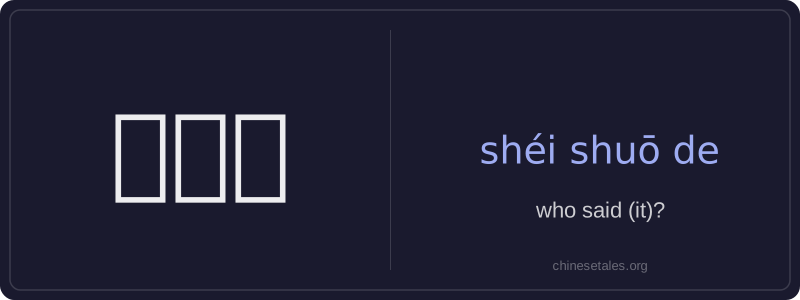
'谁说的' is a three-character interrogative phrase meaning 'Who said (it)?' It combines the interrogative pronoun 谁 (shéi, 'who'), the verb 说 (shuō, 'to say'), and the structural particle 的 (de), which here marks the action as completed or emphasizes attribution. Unlike a simple question like '谁说?', adding 的 makes the phrase more natural in spoken Chinese when seeking the source of a claim, rumor, or statement—especially when the speaker doubts or questions its validity.
This phrase often appears in conversational contexts where someone repeats information and others want to verify its origin—such as hearing surprising news, contradictory advice, or unconfirmed instructions. It’s neutral in register but carries subtle skepticism or curiosity; tone and context determine whether it sounds genuinely inquisitive or mildly challenging. The particle 的 cannot be omitted without changing nuance or sounding incomplete in this construction.
Example Sentences
Related Words
见面
见面 literally means 'see face' — combining 见 (t
后来
Later (hòulái) is an adverb meaning 'afterwards'
背后
背后 literally means 'back + behind' and functions
我的
我的 (wǒ de) is a possessive pronoun meaning 'my'
这么
这么 (zhè me) is an adverb meaning 'so' or 'this
中学
'Zhōngxué' literally combines 'zhōng' (middle)
前面
前面 (qián miàn) literally combines 前 (qián, '
面条
‘面条’ (miàn tiáo) literally means ‘flour str