Word Explanation
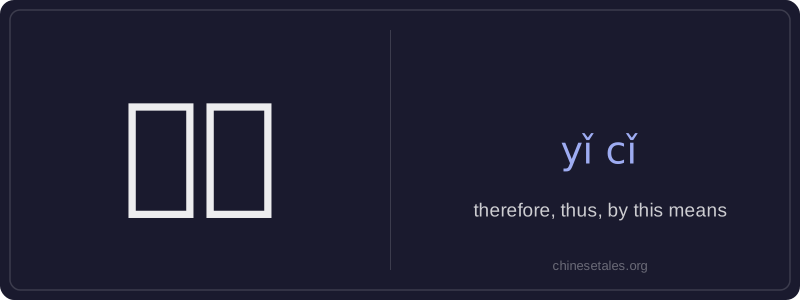
以此 is a formal, written conjunction or adverb meaning 'therefore,' 'thus,' or 'by this means.' It combines the preposition 以 (yǐ), meaning 'by,' 'with,' or 'using,' and the demonstrative pronoun 此 (cǐ), meaning 'this.' Together, they literally mean 'by this' — referring to something just mentioned or established in context. It signals logical consequence or method, and is common in essays, reports, academic writing, and formal speech.
Unlike spoken alternatives like 所以 or 因此, 以此 emphasizes agency or instrumentality — not just cause-and-effect, but how something is accomplished or justified. It often appears at the beginning of a clause or sentence, followed by a verb or result. While grammatically versatile, it sounds stiff in casual conversation and is rarely used in daily spoken Chinese.
Example Sentences
Related Words
见面
见面 literally means 'see face' — combining 见 (t
后来
Later (hòulái) is an adverb meaning 'afterwards'
背后
背后 literally means 'back + behind' and functions
我的
我的 (wǒ de) is a possessive pronoun meaning 'my'
这么
这么 (zhè me) is an adverb meaning 'so' or 'this
中学
'Zhōngxué' literally combines 'zhōng' (middle)
前面
前面 (qián miàn) literally combines 前 (qián, '
面条
‘面条’ (miàn tiáo) literally means ‘flour str