Word Explanation
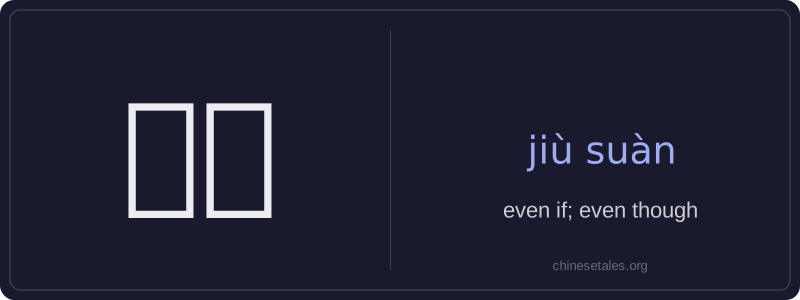
就算 is a conjunction meaning 'even if' or 'even though'. It introduces a concessive clause — a condition or situation that might be expected to prevent the main clause from happening, but does not. Literally, 就 means 'just' or 'exactly', and 算 means 'to consider' or 'to reckon'; together, they convey the sense of 'even considering that...' or 'even taking that as given...'. It’s commonly used in spoken and written Chinese to express strong concession, often with a tone of resignation, determination, or emphasis.
This word typically appears at the beginning of a subordinate clause, followed by a comma or no punctuation, before the main clause. It frequently pairs with modal verbs (e.g., 也, 还, 都) in the main clause to reinforce the contrast — for example, 就算...也... ('even if..., still...'). It’s neutral in register and widely appropriate across contexts, from casual conversation to formal writing.
Example Sentences
Related Words
中学
'Zhōngxué' literally combines 'zhōng' (middle)
见面
见面 literally means 'see face' — combining 见 (t
后来
Later (hòulái) is an adverb meaning 'afterwards'
背后
背后 literally means 'back + behind' and functions
我的
我的 (wǒ de) is a possessive pronoun meaning 'my'
这么
这么 (zhè me) is an adverb meaning 'so' or 'this
前面
前面 (qián miàn) literally combines 前 (qián, '
面条
‘面条’ (miàn tiáo) literally means ‘flour str