Word Explanation
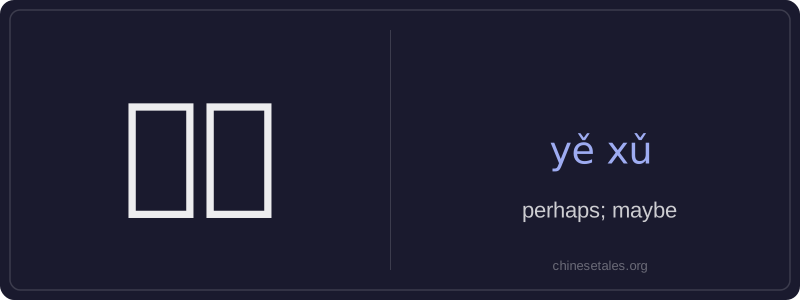
也许 is an adverb meaning 'perhaps' or 'maybe', expressing uncertainty or possibility about something. It’s formed by combining 也 (yě, 'also') and 许 (xǔ, 'to allow; to permit'), suggesting a sense of openness — as if reality 'allows' multiple outcomes. Unlike stronger modal words like 肯定 ('definitely') or 一定 ('certainly'), 也许 conveys gentle, tentative speculation and is commonly used in spoken and written Chinese to soften statements or show humility in prediction.
This word typically appears at the beginning of a clause or sentence, before the verb or subject, and can modify entire clauses. It’s neutral in register — appropriate in casual conversation, formal writing, and polite requests. While it doesn’t carry strong emotional weight itself, it often reflects cautious optimism, hesitation, or diplomatic vagueness — making it especially useful when offering suggestions, responding to questions, or discussing uncertain future events without overcommitting.
Example Sentences
Related Words
中学
'Zhōngxué' literally combines 'zhōng' (middle)
见面
见面 literally means 'see face' — combining 见 (t
后来
Later (hòulái) is an adverb meaning 'afterwards'
背后
背后 literally means 'back + behind' and functions
我的
我的 (wǒ de) is a possessive pronoun meaning 'my'
这么
这么 (zhè me) is an adverb meaning 'so' or 'this
前面
前面 (qián miàn) literally combines 前 (qián, '
面条
‘面条’ (miàn tiáo) literally means ‘flour str