Word Explanation
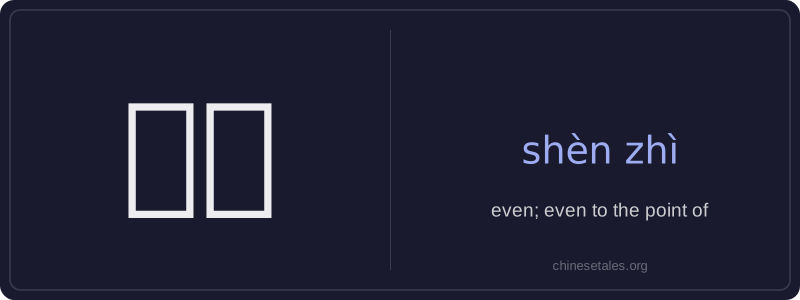
甚 means 'very' or 'to a great degree', and 至 means 'to reach' or 'up to'. Together, 甚至 literally conveys 'to the point of reaching [an extreme]', which evolved into the modern meaning 'even' — used to introduce an especially striking, surprising, or extreme example in a series or contrast. It emphasizes unexpected intensity or degree, often highlighting something beyond what was already stated or implied.
This word functions as both a conjunction (linking clauses) and an adverb (modifying verbs, adjectives, or entire sentences). It typically appears at the beginning of a clause or before the emphasized element, and is common in both spoken and written Chinese — though slightly more formal than colloquial alternatives like 连…都. It frequently appears after words like 不但, 不仅, or 而且 to strengthen contrast or escalation.
Example Sentences
Related Words
中学
'Zhōngxué' literally combines 'zhōng' (middle)
见面
见面 literally means 'see face' — combining 见 (t
后来
Later (hòulái) is an adverb meaning 'afterwards'
背后
背后 literally means 'back + behind' and functions
我的
我的 (wǒ de) is a possessive pronoun meaning 'my'
这么
这么 (zhè me) is an adverb meaning 'so' or 'this
前面
前面 (qián miàn) literally combines 前 (qián, '
面条
‘面条’ (miàn tiáo) literally means ‘flour str