Word Explanation
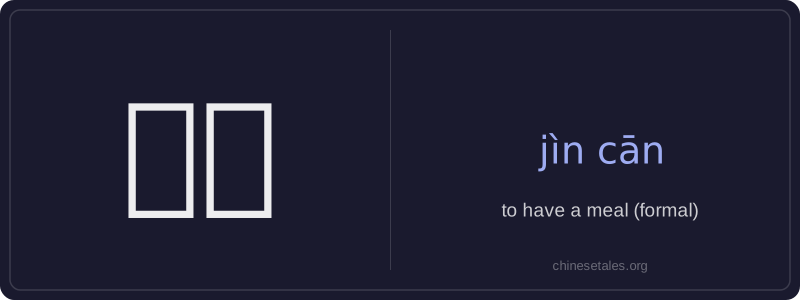
进餐 literally means 'to enter a meal'—'进' (jìn) conveys the idea of entering or partaking, while '餐' (cān) means 'meal' or 'food'. Together, they form a formal, written-term verb meaning 'to have a meal', especially in contexts emphasizing etiquette, scheduled dining, or institutional settings. It is rarely used in casual speech; native speakers typically say 吃饭 (chī fàn) instead.
This word appears frequently in announcements, restaurant menus, school schedules, and health guidelines—e.g., '请按时进餐' (Please eat meals on time). It carries a neutral-to-polite register and implies intentionality and routine rather than hunger or informality. Though grammatically a verb, it does not take aspect particles like 了 or 过 as readily as everyday verbs do, and is often paired with time adverbs or modal verbs like 应该 or 请.
Example Sentences
Related Words
中学
'Zhōngxué' literally combines 'zhōng' (middle)
见面
见面 literally means 'see face' — combining 见 (t
后来
Later (hòulái) is an adverb meaning 'afterwards'
背后
背后 literally means 'back + behind' and functions
我的
我的 (wǒ de) is a possessive pronoun meaning 'my'
这么
这么 (zhè me) is an adverb meaning 'so' or 'this
前面
前面 (qián miàn) literally combines 前 (qián, '
面条
‘面条’ (miàn tiáo) literally means ‘flour str