Word Explanation
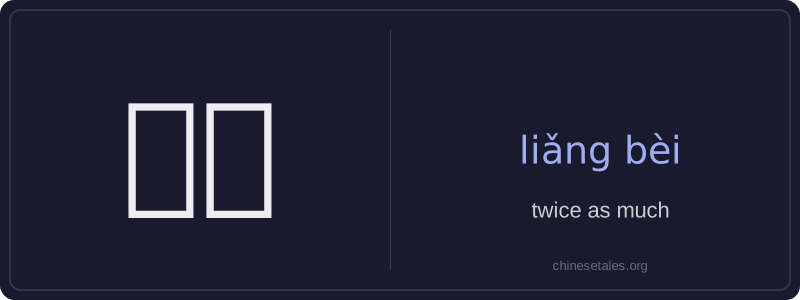
‘两倍’ literally combines ‘两’ (two) and ‘倍’ (times/multiple), meaning ‘twice as much’ or ‘double the amount’. It functions as a numeral phrase indicating multiplication by two, not a standalone noun. Unlike English, where ‘twice’ often appears with ‘as…as’ constructions, Chinese uses ‘两倍’ directly after measure words or nouns — for example, ‘两倍的价格’ (twice the price) or ‘大两倍’ (twice as big). It expresses relative quantity, not absolute value, and always compares one quantity to another baseline.
This term is common in daily comparisons involving size, cost, speed, time, or population. It’s neutral in register and appropriate in both spoken and written contexts — from casual conversations about shopping to formal reports on economic growth. Note that ‘两倍’ itself doesn’t carry tense or aspect; the verb or context conveys timing. Also, avoid using it alone without a clear reference point — saying just ‘这个是两倍’ is incomplete; you need ‘这个是那个的两倍’ (This is twice that) or similar.
Example Sentences
Related Words
见面
见面 literally means 'see face' — combining 见 (t
背后
背后 literally means 'back + behind' and functions
中学
'Zhōngxué' literally combines 'zhōng' (middle)
面条
‘面条’ (miàn tiáo) literally means ‘flour str
后来
Later (hòulái) is an adverb meaning 'afterwards'
我的
我的 (wǒ de) is a possessive pronoun meaning 'my'
这么
这么 (zhè me) is an adverb meaning 'so' or 'this
前面
前面 (qián miàn) literally combines 前 (qián, '