Word Explanation
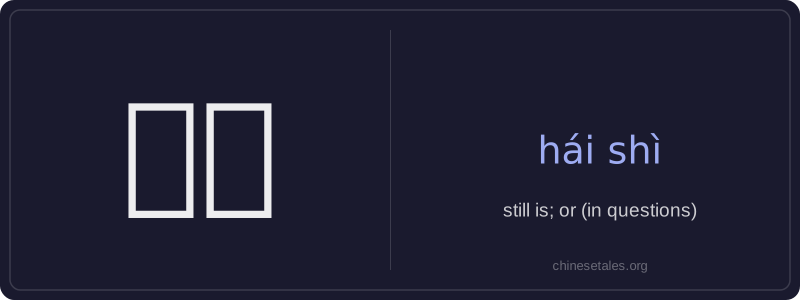
'还是' (hái shì) is a versatile two-character expression with two primary functions. As a conjunction, it means 'or' and introduces alternatives in yes/no or choice questions — for example, 'Do you want tea or coffee?' In this role, it always appears between the options and signals that the speaker expects the listener to choose one. The character 还 (hái) carries a sense of 'still, yet', while 是 (shì) means 'to be'; together, they convey a contrastive 'still being [one option] versus [another]', which evolved into the modern disjunctive 'or'.
As an adverb, '还是' means 'still is/are' or 'remains', emphasizing continuity or persistence despite expectation or change — e.g., 'He’s still tired after sleeping eight hours.' This usage often implies mild surprise or contrast with what might be expected. Both uses are extremely common in spoken and written Mandarin, especially in everyday conversations about preferences, decisions, and ongoing states.
Example Sentences
Related Words
见面
见面 literally means 'see face' — combining 见 (t
背后
背后 literally means 'back + behind' and functions
中学
'Zhōngxué' literally combines 'zhōng' (middle)
面条
‘面条’ (miàn tiáo) literally means ‘flour str
后来
Later (hòulái) is an adverb meaning 'afterwards'
我的
我的 (wǒ de) is a possessive pronoun meaning 'my'
这么
这么 (zhè me) is an adverb meaning 'so' or 'this
前面
前面 (qián miàn) literally combines 前 (qián, '