Word Explanation
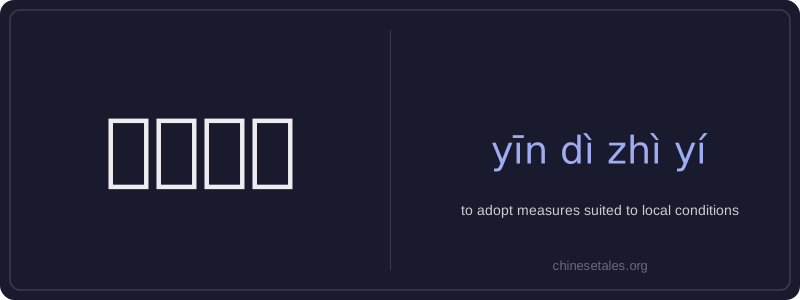
‘因地制宜’ literally means ‘according to the place, formulate what is suitable.’ It describes the principle of adapting strategies, policies, or practices to fit local conditions — such as geography, climate, resources, culture, or economic development level. The four characters work together: 因 (‘because of,’ ‘according to’) + 地 (‘place,’ ‘location’) + 制 (‘to formulate,’ ‘to devise’) + 宜 (‘what is appropriate,’ ‘suitable measure’). This idiom emphasizes flexibility and pragmatism over one-size-fits-all approaches.
It’s commonly used in policy discussions, urban planning, agriculture, education reform, and ecological conservation — anywhere context-specific solutions are needed. Though it functions grammatically as a verb phrase, it often appears as a predicate or adverbial modifier (e.g., ‘要因地制宜’ or ‘因地制宜地发展’). It carries a formal, constructive tone and is frequently seen in official documents, news reports, and academic writing.
Example Sentences
Related Words
见面
见面 literally means 'see face' — combining 见 (t
背后
背后 literally means 'back + behind' and functions
中学
'Zhōngxué' literally combines 'zhōng' (middle)
面条
‘面条’ (miàn tiáo) literally means ‘flour str
后来
Later (hòulái) is an adverb meaning 'afterwards'
我的
我的 (wǒ de) is a possessive pronoun meaning 'my'
这么
这么 (zhè me) is an adverb meaning 'so' or 'this
前面
前面 (qián miàn) literally combines 前 (qián, '