Word Explanation
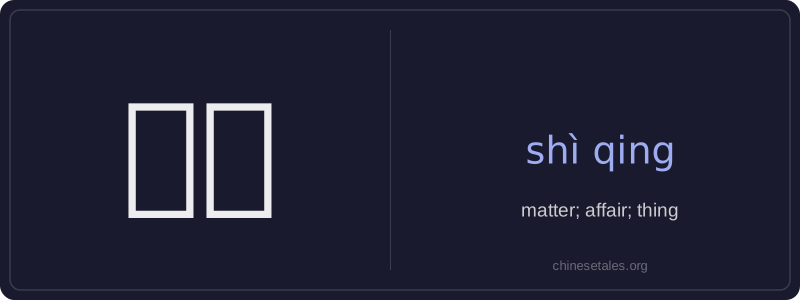
事情 (shì qing) is a common, neutral noun meaning 'matter,' 'affair,' or 'thing'—referring to an event, situation, task, or issue that requires attention or discussion. It’s formed by combining 事 (shì), which means 'event' or 'affair,' and 情 (qing), which here contributes the sense of 'circumstance' or 'state' (not to be confused with its emotional meaning in words like 情绪). Together, they convey something concrete yet abstract: a unit of activity or concern in daily life.
This word is highly versatile and appears in formal and informal contexts—from casual questions like 'What’s the matter?' (怎么了?有什么事情吗?) to official notices ('important matters'). It rarely stands alone without context; instead, it’s often modified (e.g., 重要的事情, 没什么事情) or used in set phrases like 处理事情 (handle matters) or 出了事情 (something happened, often implying trouble). Unlike the English word 'thing,' 事情 never refers to physical objects—it’s strictly about events, issues, or affairs.
Example Sentences
Related Words
见面
见面 literally means 'see face' — combining 见 (t
背后
背后 literally means 'back + behind' and functions
中学
'Zhōngxué' literally combines 'zhōng' (middle)
面条
‘面条’ (miàn tiáo) literally means ‘flour str
后来
Later (hòulái) is an adverb meaning 'afterwards'
我的
我的 (wǒ de) is a possessive pronoun meaning 'my'
这么
这么 (zhè me) is an adverb meaning 'so' or 'this
前面
前面 (qián miàn) literally combines 前 (qián, '